

The national security document announced by Israeli Prime Minister Benjamin Netanyahu on October 18, 2026, represents an attempt to reformulate Israel’s security doctrine in light of the outcomes of conflicts that have taken place since October 2023—most notably the confrontation with Iran and its allies. The document prioritizes threat prevention and preemptive strikes over containment and defense, while emphasizing the strengthening of military and technological superiority, the protection of the home front, and a reduction in reliance on external actors.
The significance of this document—which outlines ten core principles—lies in its effort to formalize the military practices Israel has employed over the past three years into a sustainable security doctrine. This announcement carries added weight given its timing: it coincides with Israeli elections scheduled for October 27, follows U.S. President Donald Trump’s expression of support for Netanyahu, and emerges amid mounting signs of a potential renewed confrontation with Iran.
1. The Nature of Security Doctrine and the Limits of Reform
- Traditional Israeli doctrine is founded on deterrence, early warning, and decisive victory, with defense subsequently added to the framework. Consequently, concepts such as taking the initiative, achieving surprise, launching preemptive strikes, and shifting the battlefield to the adversary’s territory are not new. The shift lies, rather, in prioritizing recurring preventive and offensive operations over containment.
- The document does not abandon deterrence; instead, it redefines it. The destruction of an adversary’s capabilities—and the prevention of their reconstruction—becomes an ongoing component of deterrence, rather than merely a response to aggression or a means to conclude a specific conflict.
- The document functions more as a declaration of strategic principles than as a comprehensive national security doctrine. It fails to sufficiently clarify the conditions for the use of force, the required resources, the limits of military operations, or the mechanisms for concluding such operations and translating their outcomes into sustainable political objectives.
2. Military and Operational Shifts
Preemptive Strikes and Taking the Initiative
The document expands Israel’s latitude to employ force against emerging threats, leveraging its superiority in intelligence, air power, and technology. A significant risk arises from the potential to interpret an adversary’s reconstruction of capabilities as justification for new strikes, even in the absence of an imminent attack. Furthermore, the success of an initial strike does not guarantee the attainment of a war’s ultimate objectives.
Buffer Zones and Protection of the Home Front
Israel seeks to distance threats from its borders through the establishment of security buffer zones, while simultaneously strengthening air and missile defenses, early warning systems, and fortifications. Despite the tactical advantages of buffer zones, maintaining control over them imposes military and economic burdens, while increasing the potential for friction and attrition.
Technological Superiority and Defense Autonomy
The document focuses on artificial intelligence, space, quantum technology, and domestic military industries, with the aim of maintaining qualitative superiority and reducing external constraints on military decision-making. However, complete autonomy remains limited due to Israel’s reliance on the United States for advanced weaponry, munitions, and logistical and operational support.
3. Iran and the Concept of Eliminating the Threat
- In Israeli doctrine, Iran represents the primary threat, given its nuclear and missile programs and its network of regional allies. Yet, weakening Iran’s military capabilities does not equate to the definitive elimination of the threat—especially considering the possibility that some of these capabilities could be rebuilt, or that alternative means of deterrence could be developed.
- A distinction must be made between three separate Israeli objectives: preventing Iran from acquiring nuclear weapons, curtailing its military and regional capabilities, and altering the behavior of the Iranian regime—or bringing about its collapse. Achieving the first two objectives does not necessarily lead to the realization of the third.
- A reliance on frequent preemptive operations could transform the confrontation from a targeted, limited engagement into a protracted, intermittent military conflict. The core dilemma is that weakening Iran’s military capabilities, on its own, fails to establish the political and security arrangements necessary to ensure the sustainability of any outcomes.
4. The United States and the Limits of Israeli Independence
- Israel seeks to reduce its military dependence on Washington in anticipation of a potential post-Trump U.S. administration that might be less supportive. However, this does not imply that Israel could dispense with American backing, particularly for long-range operations and protracted wars.
- Although Trump has expressed electoral support for Netanyahu, their respective calculations regarding Iran are not necessarily identical; Washington bears broader responsibilities concerning the security of the Gulf, international navigation, energy markets, and the protection of its own forces and interests.
- Political alignment and high-level military communications are not sufficient evidence of a joint decision to go to war, though they do reflect ongoing coordination and preparedness for potential escalation.
5. Regional Alliances and the Reshaping of the Security Environment
- The map of blocs presented by Netanyahu reflects an Israeli perspective that recognizes multiple centers of power and overlapping regional interests, alongside an effort to expand partnerships with countries in the region, as well as with India and others.
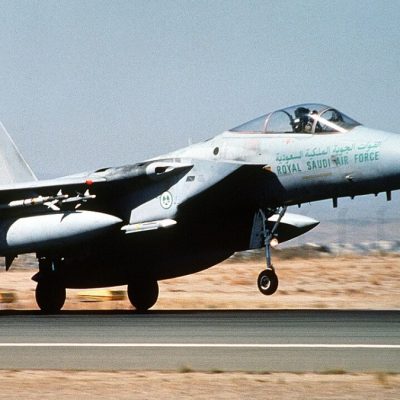
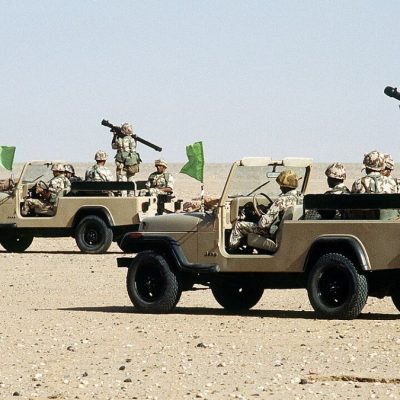
- Other arrangements—such as the “Mecca Agreement” involving Saudi Arabia, Türkiye, and Pakistan—serve as indicators of a diversification in defense partnerships, though this does not equate to the formation of a military alliance directed against Israel.
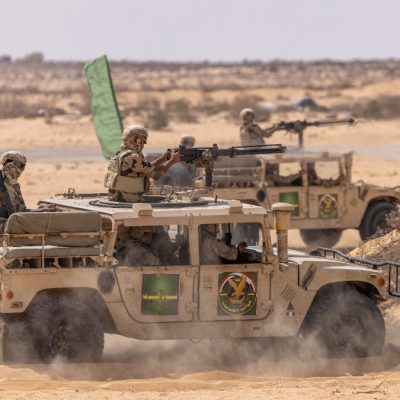
- One should not conflate political rapprochement, security cooperation, and defense commitments with the existence of a joint operational command. Furthermore, the inclusion of Egypt within a regional grouping that encompasses the signatories of the Mecca Agreement does not imply that Egypt is a member of that agreement or bound by its defense arrangements.
- In my view, portraying the region as a set of opposing military axes overlooks the complex interplay of interests, competition, and cooperation among its states; such a perspective could lead to miscalculations regarding threats and exacerbate polarization.
6. National Identity and the War for Consciousness
- The document expands the concept of national security to encompass countering attempts to delegitimize Israel internationally, engaging in a “war for consciousness,” and strengthening Jewish identity, internal cohesion, and settlement activity.
- This reflects an intertwining of military, political, and ideological considerations—a dynamic that may lead to the use of force to pursue political objectives that are difficult to resolve through military means alone, particularly in the Palestinian territories. Such an approach risks increasing economic and social burdens, as well as the potential for international isolation.
7. Electoral Timing and Netanyahu’s Calculations
- The announcement was made nine days before the elections—coinciding with Trump’s support for Netanyahu—in an apparent effort to reframe past military operations as strategic achievements. This serves as a counter-narrative to the opposition’s criticisms regarding the failures of October 2023 and the high costs of the ongoing wars.
- However, the document should not be reduced merely to electioneering; the shifts it addresses were already underway before its publication and are likely to persist beyond the elections, regardless of the composition of the new government—though the specific priorities for implementation and the thresholds for the use of force may vary.
8. The Prospect of Renewed Conflict with Iran
The document gains added significance in light of U.S. Secretary of Defense Pete Hegseth’s visit to Israel on October 19, during which he met with Netanyahu at the Uvda Airbase—a facility that hosts U.S. military aircraft. Despite the importance of the visit, it does not confirm that a decision to go to war has been made.
I foresee three main possibilities:
- The continuation of military and political pressure—short of a full-scale war—by maintaining operational readiness, exchanging intelligence, and brandishing the threat of strikes, all while seeking to prevent Iran from restoring its capabilities.
- The execution of limited Israeli strikes against specific Iranian targets, should Israel determine that the restoration of certain capabilities has crossed its established red lines.
- The eruption of a broad military confrontation, whether through a deliberate decision to escalate or the failure to contain limited operations—particularly if an Iranian response extends to American interests or the Gulf states.
In my view, the most dangerous scenario is not a premeditated decision to launch an all-out war, but rather the escalation of a limited confrontation into a wider conflict—driven by miscalculation, an overestimation of the outcomes of an initial strike, or a misjudgment regarding the limits of American intervention.
9. Conclusions
- The fundamental innovation in Israeli doctrine lies not in the means of warfare, but in the expansion of the circumstances that justify their use—effectively transforming the prevention of an adversary’s capability restoration into an ongoing military objective.
- The document reveals a gap between Israel’s military superiority and its ability to achieve sustainable political outcomes; it also highlights the inherent contradiction between the pursuit of military self-reliance and a continued strategic dependence on the United States.
- The establishment of buffer zones and the strengthening of home-front defenses reflect Israel’s recognition of the limits of its own military supremacy—acknowledging that, despite the results of its offensive operations, it cannot preempt or neutralize every threat.
- The current landscape of regional blocs does not represent formal, fully-fledged military alliances; rather, it reflects an Israeli conception of a fluid network of interests and partnerships.
- The timing of the announcement serves a clear electoral purpose; however, the security shifts addressed in the document run deeper than mere electoral competition and may persist even after the formation of the next government.
10. Future Perspectives
- The timing of Trump’s endorsement—coinciding with the release of the document—is designed to boost Netanyahu’s standing in the elections. It may also hint at the possibility of a strike against Iran following the elections, contingent upon a victory for Netanyahu.
- Israel will likely continue to prioritize preemptive intelligence and military operations, while seeking to retain the initiative and avoid becoming mired in prolonged wars of attrition whenever possible.
- Increased investment in air and missile defense, early-warning systems, advanced technology, and the military-industrial sector, alongside the enhancement of long-range offensive capabilities.
- Continued tension with Iran, with the potential for limited strikes—though not necessarily a full-scale war—while the risk of miscalculation remains a primary driver for potential escalation.
- Continued expansion of Israel’s regional and international partnerships, while maintaining the United States as its principal military and strategic partner.
- A potential increase in military, economic, and political burdens should preemptive operations evolve into a permanent mode of conflict management, absent any clear terms for bringing the conflict to an end.
Sayed Ghoneim, PhD
Major General (retired) of the Egyptian Armed Forces
Chairman, Institute for Global Security & Defence Affairs (IGSDA), UAE
www.igsda.org
Sources
- Open sources.
- Private sources.
Featured image: Major Ofer, Israeli Air Force (CC BY 4.0)