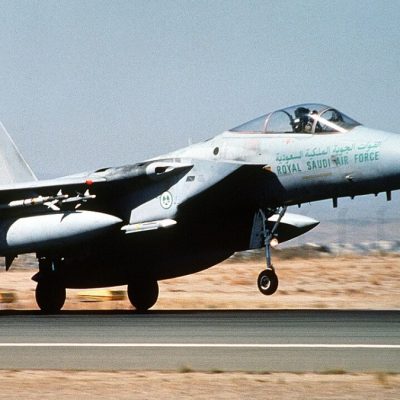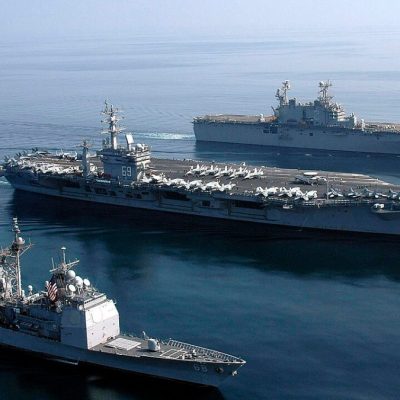


Signs of military escalation in the Middle East are increasing as the US naval blockade of Iranian ports continues, Gulf air defence systems are targeted, the Saudi–Houthi confrontation widens, and pressure mounts on Hezbollah in Lebanon and Iranian-backed armed factions in Iraq. This coincides with intensified reciprocal strikes against Russian and Ukrainian energy facilities and the expansion of Ukrainian naval operations beyond the Black Sea into the Mediterranean and North Africa. The gravity of these developments lies in the growing reliance on targeting military and economic capabilities, energy facilities, shipping and supply lines as instruments of strategic pressure, and in the overlapping consequences of conflicts despite their differing objectives and parties, affecting regional and international balances of power.
Developments in the US–Iranian Confrontation
1. The United States continues to enforce its naval blockade of Iranian ports. On 26 November, a US aircraft disabled a cargo vessel in the Gulf of Oman after it departed Bandar Abbas, the first publicly announced disabling of a vessel attempting to evade the blockade since 7 November. This coincides with growing calls within Iran for military measures to compel Washington to lift the blockade.
2. Seven oil and gas tankers were attacked near Khasab between 16 and 21 November, predominantly vessels departing via the southern route through the Strait of Hormuz. This coincided with Iranian threats to target Gulf oil facilities in response to the interception of Iranian tankers.
3. Iran denied responsibility for the attack that killed two Italian technicians maintaining a counter-drone system in Kuwait on 26 November, despite confirmation by the Kuwaiti and Italian governments that they were killed by fragments of intercepted Iranian drones.
4. The repeated targeting of air defence systems in Kuwait and Bahrain reflects Iran’s efforts to weaken US and Gulf defensive capabilities in anticipation of possible renewed US and Israeli strikes against Iran, and to pressure Gulf states to reduce their military cooperation with Washington.
Developments in the Saudi–Houthi Confrontation and the Situation on the Ground in Yemen
1. Saudi Arabia intensified its air strikes against Houthi military capabilities, announcing the destruction of 50 military targets in Sana’a, Hodeidah and Saada, including missile launchers and weapons manufacturing facilities.
2. Clashes intensified in southern Al Jawf and north-western Marib, coinciding with increased drone strikes by Yemeni government forces along the Taiz–Aden axis to disrupt Houthi troop movements and supplies between the Taiz and Lahj fronts and limit their ability to advance southwards.
3. The Houthis continued targeting Saudi oil facilities. An attack on the Jazan refinery on 26 November temporarily halted operations, following the targeting of the Ras Tanura refinery on 24 November. Reports indicate that five of Saudi Arabia’s nine largest oil refineries and three major oil processing facilities have been damaged since July 2026.
4. Houthi threats to Saudi Red Sea ports are becoming increasingly serious, particularly given the importance of Yanbu port and the East–West pipeline as an alternative to the Strait of Hormuz for Saudi oil exports, coinciding with the Houthis strengthening their positions on Yemen’s western coast near Bab al-Mandeb.
Mounting Pressure on Hezbollah and Iraqi Armed Factions
1. Tensions between Hezbollah and the Lebanese government are increasing following judicial proceedings against several Hezbollah members on charges relating to arming unlawful armed groups and smuggling explosives. This prompted Naim Qassem to issue an implicit threat to the Lebanese government in an effort to obstruct judicial proceedings and measures to disarm Hezbollah.
2. Israel continues to target Hezbollah’s military capabilities, having struck dozens of rockets, their launch sites and a Radwan Force training camp in the western Bekaa, with the aim of obstructing the rebuilding of its military capabilities and reducing its threats.
3. The Iraqi government continues its efforts to curtail the influence and funding sources of Iranian-backed armed factions by strengthening federal control over border crossings and oilfields, and combating oil smuggling, blending with Iranian oil and re-exporting it to circumvent US sanctions.
Developments in the Russia–Ukraine War and Their Regional and International Implications
1. Russia intensified its strikes against Ukrainian energy facilities, electricity networks and vital infrastructure, particularly in southern Ukraine, seeking to deplete its economic and military capabilities and exert pressure on its home front as winter begins.
2. In response, Ukraine intensified its long-range strikes against Russia’s energy system, targeting several oil refineries, storage facilities, oil pumping stations and pipelines between 23 and 27 November, as well as facilities associated with Russia’s defence industries, thereby increasing the economic and military burdens on Moscow.
3. Ukrainian strikes caused operations at the ports of Rostov, Taganrog and Azov to halt in early November, and disrupted overland supply lines to Crimea following strikes against the Kerch Bridge and several major bridges and roads.
4. Ukrainian operations against Russian maritime targets beyond the Black Sea have expanded to encompass the Baltic Sea, the Caspian Sea and the Mediterranean, including the reported targeting of Russian naval vessels and ships in Benghazi on 22 November. This reflects Ukraine’s growing capability to conduct long-range operations using unmanned systems. According to military and security sources, the Benghazi operation prompted the rerouting of a Russian maritime convoy bound for Libya and the suspension of another convoy’s movements, carrying military equipment some of which may have been intended to support Russia’s Africa Corps.
5. Pressure is mounting on Russia’s air defence system and its ability to protect vital facilities, as Moscow moves to tighten legal restrictions on the publication of information concerning the effects of Ukrainian strikes, to reduce security vulnerabilities and conceal the extent of damage.
6. Despite continued US and European diplomatic efforts and Abu Dhabi’s hosting of trilateral talks on Ukraine, disagreements persist over security guarantees for Ukraine, the future of Russian-controlled territories and European participation in a settlement.
Conclusions
1. The continuing US naval blockade and mounting economic and military pressure on Iran and its allies in Yemen, Lebanon and Iraq are driving Tehran to increase the cost of confrontation for the United States and Gulf states by threatening shipping and oil facilities and weakening Gulf defensive capabilities. This may increase Iran’s international isolation and limit its ability to sustain its regional influence.
2. Saudi Arabia seeks to weaken Houthi offensive capabilities, while the Houthis seek to exert pressure on Saudi political decision-making through damaging attacks on economic infrastructure, to compel Riyadh to cease its military operations and support for the Yemeni government and lift restrictions on ports and airports under Houthi control.
3. Mounting military pressure on the Houthis in Al Jawf, Marib and Taiz may ease pressure on Lahj and Aden, provided anti-Houthi forces coordinate their efforts and unify military command and decision-making.
4. In my assessment, Israel’s continued targeting of Hezbollah’s key military strongholds, particularly Ain al-Tineh in the western Bekaa and Al-Qantara in southern Lebanon, following strikes against the Ali al-Taher heights, serves two principal objectives:
- Operationally: To undermine Hezbollah’s combat capabilities, particularly those of the Radwan Force, and deny it the ability to rebuild its military capabilities and regain operational effectiveness.
- Strategically: To place Iran before two costly options: refrain from intervening to rescue Hezbollah, thereby weakening its credibility among its allies in what it calls the Axis of Resistance; or intervene militarily in its support, giving Netanyahu an opportunity to widen the confrontation with Iran and increasing the likelihood of US involvement in a large-scale military confrontation that the parties concerned seek to avoid.
5. Ukraine seeks to offset the imbalance of land forces by depleting Russia’s military and economic capabilities through targeting energy, transport and supply systems inside and outside Russia, increasing the cost of war without necessarily altering the balance of land forces. Ukraine has also crossed several Russian red lines without a nuclear response, weakening the credibility of Russian nuclear threats and raising questions about the actual readiness of some of its tactical nuclear capabilities.
6. The expansion of Ukrainian operations into the Mediterranean and North Africa reflects a potential strategic shift in the nature of the war, from a struggle over territory and influence in Eastern Europe to one extending to the sustainability of Russian military influence beyond it, by threatening its supply lines to Libya and the Sahel–Sahara states and limiting opportunities for expansion towards the Red Sea through Sudan, amid declining Russian influence in Syria. This partly aligns with European strategic interests, without evidence of joint planning.
7. The objectives of pressure on the Russian, Iranian and Saudi energy sectors differ: depleting Russian economic capabilities, reducing Iranian export revenues and influencing Saudi political decision-making. Their concurrence threatens global energy security, particularly if Saudi oil export routes through the Red Sea come under threat alongside disruption to shipping through the Strait of Hormuz.
8. Despite insufficient evidence of direct operational coordination between Iranian and Houthi attacks, or of a link between Ukrainian operations and escalation in the Middle East, the concurrence of the two conflicts increases the military and economic burdens on their parties, confronts the United States and Europe with challenges in allocating military capabilities, and confronts Russia and Iran with challenges in sustaining their military and regional influence.
Forecasts
1. Continued military and maritime escalation in the Arabian Gulf and Gulf of Oman, with an increasing likelihood of Iran targeting Gulf oil facilities should the United States expand its interception of Iranian tankers.
2. Continued Saudi–Houthi confrontation and further mutual attrition, with prospects for curbing the Houthi advance towards Aden dependent on the ability of anti-Houthi forces to unify their military efforts, and an increasing likelihood of Houthi attacks on Saudi Red Sea ports.
3. I expect Israel to continue targeting Hezbollah’s key military strongholds, particularly the Radwan Force, alongside escalating tensions between Hezbollah and Lebanese state institutions. Iran is likely to avoid direct military intervention to rescue Hezbollah, despite the potential loss of credibility among its allies. Military intervention, however, could give Netanyahu an opportunity to widen the confrontation with Iran and increase the likelihood of US involvement.
4. Growing internal tensions in Iraq as the Iraqi government continues its efforts to undermine the influence and funding sources of Iranian-backed armed factions.
5. Continued reciprocal escalation against Russian and Ukrainian energy facilities throughout winter, and expanding Ukrainian operations against Russian military interests beyond the main theatre of war, while Moscow moves to strengthen protection of its overseas military presence and supply lines. This will intensify military competition and friction in the Mediterranean and Africa, with implications for the security of European and African states. I expect Moscow to continue employing nuclear threats as an instrument of pressure and deterrence without resorting to the actual use of tactical nuclear weapons in the near term.
6. A widening US–Iranian confrontation may affect the volume and speed of Western military support available to Ukraine, particularly air defence systems and ammunition, owing to growing US and Gulf military requirements.
7. The most dangerous scenario would be a damaging Iranian attack on Gulf oil facilities coinciding with a damaging Houthi attack on a Saudi oil port on the Red Sea, amid continued Ukrainian strikes against Russia’s energy system. This could cause widespread disruption to global energy supplies, higher energy prices and shipping and marine insurance costs, and increased economic burdens on energy-importing countries, particularly in the Middle East and North Africa.
In my assessment, continued limited and reciprocal escalation in the Middle East remains more likely in the near term, despite the growing risk of Iran being drawn into a direct confrontation with Israel entailing large-scale US military intervention. This coincides with the gradual transformation of the Russia–Ukraine war into a conflict extending to the sustainability of Russian military influence beyond Eastern Europe. The strategic danger lies in the overlapping implications of the two conflicts for energy security and international shipping, the balance of military influence in the Mediterranean, Africa and the Middle East, and the calculations and military priorities of the major powers.