

Introduction:
The U.S. strike on Iran’s Larak Island and Iran’s subsequent response mark a significant development in the renewed confrontation over the Strait of Hormuz. Beyond their immediate tactical dimensions, the two actions provide important indicators of U.S. efforts to secure freedom of navigation and constrain Iran’s ability to threaten maritime traffic, as well as Tehran’s current approach to calibrated retaliation and escalation management. This assessment examines the operational significance of the Larak strike, the scale and nature of Iran’s response, and what these developments reveal about the evolving military balance, Iranian decision-making, and the broader U.S. strategy toward Iran.
- The US strike against Larak, August 30, 2026:
On the night of Sunday, August 30, 2026, US forces targeted two Iranian missile launch sites on Larak Island in the Strait of Hormuz after detecting the Iranian Revolutionary Guard Corps (IRGC) preparing to launch missiles loaded with naval mines toward the strait.
The IRGC announced the attack, stating that a number of its fighters and civilians were killed and wounded, without providing a precise count. It vowed to retaliate and punish those responsible for the attack. Iranian media also reported hearing a loud explosion near the island before the nature of the attack became clear.
According to information available so far, the strike was carried out by US drones, with the possibility, though unconfirmed, of other means being used.
Initial Assessment:
Available data indicates that the US strike was preemptive and limited, focused on a specific tactical objective: preventing a potential operation to re-plant naval mines in the Strait of Hormuz, which could once again threaten international shipping. The strike’s significance stems from its timing and location. If the United States was indeed able to detect Iranian preparations before the missile launch and then strike the launch sites, this indicates continued US monitoring of Iranian military activity within the Strait and its ability to transition from monitoring to targeting within a short timeframe.
Furthermore, the targeting of two launch sites that US Central Command said the Revolutionary Guard was preparing to use to launch missiles loaded with naval mines demonstrates that Washington views the risk of re-mining the Strait as a direct threat to freedom of navigation, not merely an internal Iranian military activity.
In my view, this operation largely supports two of our previous assessments:
First, that the naval and economic blockade and economic sanctions are part of the US hybrid war against Iran, complementing the primary military action, which has not and will not cease. The current phase is economic and complements military operations; it is inseparable from them. Second: The United States plans to secure the Strait of Hormuz, in an interim phase, by wresting control of it from Iran. Currently, it is working to deter any Iranian threat to maritime traffic through the strait as a prerequisite for its eventual liberation.
In this sense, the strike can be viewed as part of a broader operation aimed at establishing effective and sustainable freedom of navigation in the strait and reducing Iran’s ability to use it as a tool for strategic pressure or blackmail.
On the other hand, we must consider the importance of Larak Island:
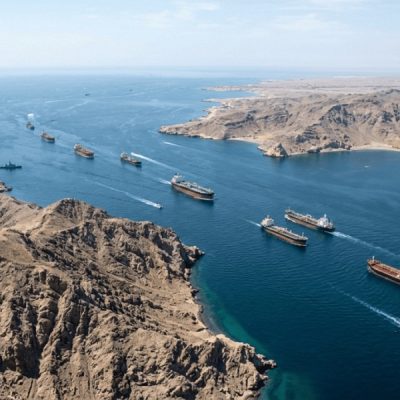
Larak Island derives operational importance from its proximity to the shipping lanes in the Strait of Hormuz, allowing it to be used as a forward observation point or for deploying capabilities that threaten shipping within the region. Therefore, targeting its mine-launching platforms carries significance that extends beyond the tactical objective to depriving Iran of an advanced capability to threaten maritime traffic from a sensitive geographical location.
Operational Aspect:
If the details of the operation are confirmed, it reveals the continued importance of American superiority in the areas of intelligence, surveillance, reconnaissance, and precision targeting. Targeting specific platforms at night in a highly sensitive maritime area requires advanced capabilities in target detection, identification, and tracking, along with the ability to execute the strike with precision and minimize collateral damage.
However, there is still insufficient public information to definitively determine the types of American combat, electronic, and intelligence assets involved in the operation. The American fighter jets deployed in the region, along with EA-18G Growler electronic warfare aircraft and RQ-4 Global Hawk or E-3 Sentry reconnaissance and early warning aircraft, remain potential targets. These systems are part of the American capabilities available in the region, and it is theoretically possible that some of them participated in such operations. However, attributing their involvement specifically to the Larak strike requires evidence or an official announcement.
- “Immediate Iranian Response to the Targeting of Larak Island” – Monday morning, August 31, 2026:
Iran targeted American bases following American airstrikes on Larak Island, which came after the Iranian regime’s attempt to plant mines in the Strait of Hormuz. The Jordanian army announced that it had intercepted eight missiles that penetrated the Kingdom’s airspace overnight. Meanwhile, Iran claimed to have launched a drone attack on Al Minhad Air Base in the UAE before dawn on August 31, a claim denied by the UAE Ministry of Defense later that morning. The Iranian Revolutionary Guard also announced that it had shot down a US MQ-9 drone over the Strait of Hormuz.
Accordingly, our assessment would get wider as follows:
I believe the scale of the Iranian response confirms that it executed what can be considered a pre-planned retaliatory scenario, targeting a very small part of the US military presence in the region and selectively. Iran responded within hours, but chose limited targets instead of a large-scale, direct strike, which confirms that the decision was centralized and deliberate, not a knee-jerk reaction.
This selective response may indicate that Iran is still thinking, planning, and managing, meaning it still maintains centralized decision-making and is skillfully managing its escalation to preserve its room for maneuver in future negotiations, while also issuing a warning (which appears less severe than before) to its allies. It is not a dying entity whose limbs are striking indiscriminately in every direction with a “me and my enemies” mentality. At the same time, the size of the reaction and the extent of the impact that was observed does not mean that Iran has the ability to match the strength of the response, but rather it indicates the limits of its operational capabilities, and the evidence is the size of the Iranian offensive means used, and the size of the impact resulting, in addition to the UAE’s denial.
Here, I have to go back two weeks, August 15, when Ahmad Rastineh, a member of the Iranian parliament’s Cultural Committee, declared that “Iran’s military strategy has shifted from defense to offense,” directly linking this to preparations for a confrontation with the United States. On August 26, Iranian military spokesman Mohammad Akramian stated: “The new Iranian military approach includes faster responses, preemptive action, and the use of new equipment and tactics.” This has not materialized, aside from a rapid response, which lacked the same impact or force. However, Iran deliberately demonstrated the speed of its response and its capacity for a calculated retaliation. This, in my view, reinforces the idea that Iran is committed to its narrative, which essentially states: “Iran’s endurance of strikes from the world’s greatest power is considered resilience, and its immediate response, even if ineffective, is itself a form of equivalence… and both are considered by Iran to be repeated victories.” Yet, Iran is not demonstrating preemptive action, new tactics, or a deterrent effect in its strikes. I believe the United States is closely monitoring this within the framework of its plan, which, in my opinion, boils down to “gradually destroying the Iranian regime through attrition and escalating military/economic pressure.” Finally, I noticed that US President Donald Trump posted an AI-generated video with the caption “Iran’s Kharg Island is completely destroyed and turned into rubble.” In my opinion, besides representing an offensive propaganda narrative through which Trump is trying to undermine the Iranian narrative of resilience, it is a prelude to American and international public opinion accepting the idea of destroying Iranian infrastructure and undermining the impact of the Iranian response on the Iranian interior.
Institute for Global Security and Defense Affairs (IGSDA):
- Middle East and North Africa Board.
- Associate Researchers’ Board,
Sayed Ghoneim, PhD
Major General (retired) of the Egyptian Armed Forces
Chairman, Institute for Global Security & Defence Affairs (IGSDA), UAE
Sources:
- Open sources.
- Private sources.