

In my opinion, the answer is as follows:
Iran usually avoids steps that could lead to a full-scale war, although it typically resorts to calculated escalation through proxies, indirect attacks, or economic pressure. This is linked to two factors: Iran’s actual capacity to carry out such actions and its willingness to withstand regional and international repercussions. However, now, after killing Khamenei, Iran is striking with its all capabilities and has disregarded the costs and the challenges of bearing the consequences and facing the biggest forces.
From this perspective, I believe that the next step of Iran, specially if Gulf and Western states intervene to confront Iran, it will resort to rapidly escalating the crisis from a limited regional theater to a broader regional and international theater through the following:
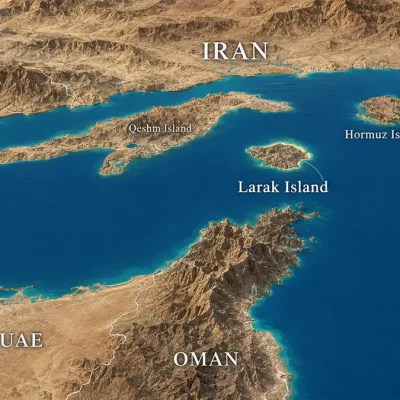
- A complete closure of the Strait of Hormuz, as well as supporting the Houthis in closing the Bab el-Mandeb Strait, using naval & air drones, sea mines, and coastal missiles.
- Expanding attacks on the US assets, interests, and citizens, and extending these attacks to include French and German targets.
- Iran continues relying on asymmetric warfare and possesses a vast network of proxies.
- If some Gulf states intervene by launching strikes against Iran (perhaps all of them except Oman), Iran if it’s still capable, it will shift its focus to the most vital and impactful targets in those countries, such as major oil and gas refineries and fields, state-run satellite channels, major factories and technology industry facilities, financial centers and major banks, and the peaceful nuclear facility.
Iran possesses precision missiles and drones capable of striking oil installations (as happened in Abqaiq and Khurais in 2019), and it has sleeper cells or support networks in some countries, particularly Bahrain, where unrest has already begun. - Targeting the Bahrain Causeway connecting Bahrain to KSA to isolate Bahrain and declare it an Iranian province, while the Bahraini Shia majority escalates unrest in Bahrain and targets and seizes the royal palace.
This is a highly sensitive target and can be executed using missiles and/or drones. Especially since Bahrain has a history of sectarian tensions, which Iran will exploit, as it did during the 2011 uprisings.
Potential challenges that could hinder this:
- Iran’s continued ability to carry out such attacks despite the heavy blows and significant losses it has suffered.
- The difficulty for Iran to completely close the Straits of Hormuz and Bab el-Mandeb, especially after the destruction of Iranian naval forces in the Gulf of Oman.
- Targeting European citizens could push Europe toward a more hostile stance against Iran.
- the effectiveness of the Iranian proxies has diminished over time in Iraq, Syria, Lebanon, and Yemen
I believe these challenges will not completely prevent everything I have predicted, but they will lessen its impact.
Dr. Sayed Ghoneim