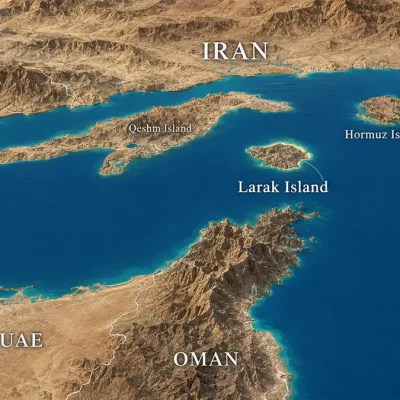


The US is betting on a gradual escalation strategy, preferring to manage the conflict rather than ignite it. This involves the gradual deployment of US forces in the region, particularly against Iran, while attempting to prevent the conflict from spreading. The US strategy relies on weakening the ruling regime by dismantling its power bases and leveraging the intervention of protesters to step it down (the gradual increase in the number of protesters coinciding with the gradual weakening of the regime).
Conversely, Israel is trying to push the US to escalate the conflict, utilizing all available American capabilities, including its own forces stationed at US military bases and even deploying additional US troops.
Iran is betting on survival or chaos, exploiting the US and Israeli strikes and its counterstrikes to unify the Iranian public. It’s expanding its attacks against Israel and against US bases, assets, and interests in the Gulf states and the wider region, excluding Turkey. This has effectively broadened the conflict from a two-way conflict in specific theaters (where Iran’s proxies are present) to a larger regional arena, transforming the Gulf states into battlegrounds. Iran is seeking to escalate the conflict further, exploiting its attacks in the Gulf states and the closure of the Strait of Hormuz. This undermines 2 of the 5 strategic objectives of the US in the Middle East: protecting shipping lanes and securing oil resources. Iran aims to exert pressure on China, Japan, South Korea, and other Southeast Asian countries that benefit from Iranian and Arab oil, as well as from the Suez Canal.
This has prompted European countries, namely Britain, France, and Germany, to intervene in the conflict against Iran. It may also push some or all of the Gulf states, as well as Jordan, to intervene. All of this will likely lead to a distancing from countries that had previously grown closer to Iran, such as Egypt, though without direct offensive intervention.
The biggest loser here is Turkey (in terms of security), which is negatively impacted by the potential collapse of Iran and the exploitation of the chaos by Kurds and other minorities to expand their territories and strengthen their ties.
China is also harshly affected, given the rising oil prices, the possibility of the US seizing Iranian oil, and the potential impact on the Russian regime, which could consequently affect China itself. However, China, acting on the principle of “necessity knows no law,” will be forced to support Iran economically, intelligence-wise, and technologically to the fullest extent possible to prevent its collapse. It will exploit the prolonged conflict to divert American efforts away from Taiwan.
Egypt, which is severely affected by the decline in Suez Canal revenues and the loss of Iran’s role in the regional balance of power, will also be impacted.
The biggest winner here is Israel, which has dealt a fatal blow to the balance of power and influence in the region and succeeded in its early plan: an alliance of Sunni Arabs with Israel and the US against the Iranian Shiite camp.
Russia is also a big winner, benefiting from the US and European involvement in Ukraine and from rising oil prices, forcing China to rely entirely on Russian oil and gas. However, Russia will lose a crucial ally that secures its southern flank and the Caspian Sea: Iran.
Dr. Sayed Ghoneim