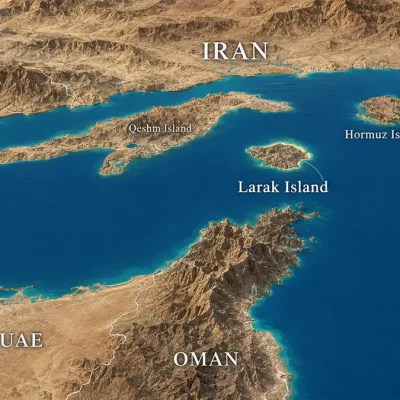


Russian Warships Arrive at Bandar Abbas – Surprise Exercises with IRAN Set to Begin Near Hormuz Chokepoint Amid U.S. warships Presence
Russia, Iran, and China have deployed naval vessels for joint exercises in the Strait of Hormuz region under the “Maritime Security Belt 2026” framework.
Russia’s Baltic Fleet corvette Stoikiy (often referred to in reports as a “Russian warship” or “helicopter carrier” in some translations, though it’s a Steregushchiy-class corvette) docked at Iran’s strategic naval base in Bandar Abbas on Wednesday morning (February 18). The arrival supports upcoming joint naval activities with the Iranian Navy, hosted by Iran’s First Naval District in Bandar Abbas.
My comment:
Initially, with now also China and Russia within the territorial boundaries of Iran, and given the enormous buildup of US tankercapacity towards the region.
In my view, while the United States aims to force Iran to comply with its demands, exploiting continuous pressure through gradual escalation without sliding into a full-scale war against Iran or a regional war involving other countries, Iran aims to raise the cost of targeting it and demonstrate that it is not isolated. China, for its part, aims to prevent war at all costs to ensure that Iranian oil does not fall into the hands of the United States, which would threaten China’s energy supply lines and grant Washington a monopoly on maritime security. Amidst all this, Russia aims to break the Western encirclement and reclaim its sphere of influence.
Joint naval exercises between Iran, Russia, and China are not new, but this time they come at a highly sensitive time, in one of the world’s most dangerous locations. The Strait of Hormuz, through which approximately 20 to 25% of the world’s seaborne oil trade passes, cannot tolerate any threat. The initiative, titled “Maritime Security Belt 2026,” carries a symbolic dimension; it is an attempt to demonstrate the existence of an alternative security system to Western maritime arrangements in the Gulf. These joint exercises attempt to demonstrate a supportive alliance for Iran, but I don’t expect China or Russia to intervene so easily if Iran were to suffer a major attack.
As for the arrival of the Russian multi-mission combat frigate “Stoyki” in Bandar Abbas, while ostensibly for joint training, it presents itself as the equivalent of the American aircraft carrier already present in the region. It possesses surface-to-surface missiles, anti-submarine warfare capabilities, air defense systems, intelligence, command and control, and electronic warfare capabilities. Its presence in Bandar Abbas legitimizes the Russian military presence in an Iranian port and transfers operational expertise to the Iranian navy in challenging operational conditions, enabling it to conduct precise reconnaissance and surveillance of American deployments around Iran.
China, while not a traditional military power in the Gulf and not actively involved in operations, is the biggest beneficiary of stable energy flows and the most concerned about Washington’s ability to disrupt supply chains. In my opinion, China’s participation in the Iranian exercises may be aimed at establishing a military presence, even if only for training purposes, conducting surveillance, and creating a protective political umbrella for Iran against any direct attack. In general, the Chinese and Russian presence on the Iranian coast postpones any potential military action in the region, perhaps especially during Ramadan, against the Islamic Republic of Iran.
I believe this is what gives Iran a degree of leverage over time.
Dr. Sayed Ghoneim