

First: Facts:
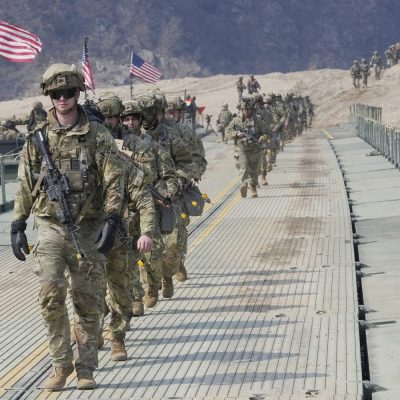
- Trump is meeting with his national security team to discuss ways to strike Iran.
- Negotiations with Iran have yielded no new developments so far.
- Axios: Trump wants to reach an agreement to end the war, but Iran’s refusal to make meaningful concessions on its nuclear program is putting the military option back on the table.
- Trump has publicly threatened several times in recent days to bomb Iranian infrastructure if diplomacy fails.
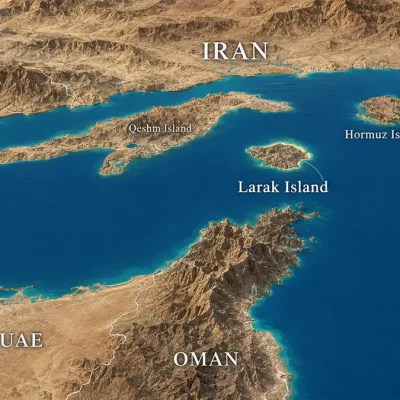
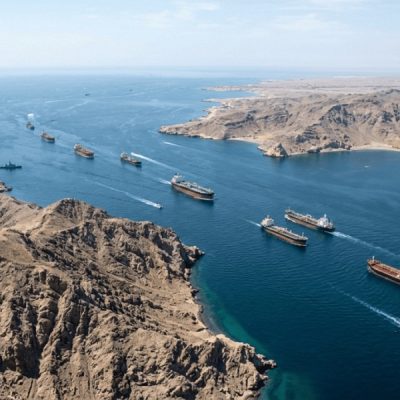
- Dual blockades are a difficult weapon to reverse. The US is tightening its grip on Iranian ports and ships, while Iran is tightening its control over the Strait of Hormuz.
- Neither side is willing to give up its leverage first without something in return.
Second: My analytical view regarding the possibility of a renewed military strike against Iran, exploiting the results of the nearly month-long naval blockade:
- Iranian cohesion and resilience are based on five elements: (the religious leadership represented by Mojtaba Khamenei and his Assembly of Experts and the House of the Seal of the Prophets; the Iranian Revolutionary Guard Corps – IRGC; the regular Iranian army; the Basij militia; and the Iranian people who support the ruling regime).
- The American Navy Blockade has significantly weakened Iranian capabilities and cut off a substantial amount of funding, estimated at around $400 to $500 million daily. However, Iran relies on its access to the Caspian Sea and some of its land borders to compensate for some of its losses.
- Iran continues to threaten the Strait of Hormuz (SoH) and maintains (at least partially) control over it, imposing transit fees in a semi-systematic manner.
- Iran has threatened to impose fees on users of underwater fiber optic cables, whether from Meta or other companies. Furthermore, with the potential for escalation, the Houthis, and possibly other actors, may threaten the Bab el-Mandeb Strait.
- Should the US resume its strikes against Iran, with or without Israeli support, they would likely target several military and civilian objectives that would impact Iran’s cohesion and its escalation goals, as follows:
Militarily:
- IRGC bases and command and control centers, with the aim of destroying the hard power of Iranian decision-making.
- Military ports, with a focus on remaining fast attack craft and mosquito-boats, and coastal surface-to-surface missile units located on Iran’s southwestern coast and islands.
- Air defenses, particularly low-altitude systems and radars.
- Other military factories capable of production and their storage facilities.
- Ballistic missile facilities, launchers, fuel and storage facilities, and drone facilities.
- The remaining nuclear infrastructure related to enrichment, research, and development. This could be accomplished with the assistance of forces and operatives working behind enemy lines from covert administrative bases in countries bordering Iran.
Civilian/Economic:
- Economic port infrastructure, both on the southwestern coast of the Gulf and on the Caspian Sea coast.
- Factories and warehouses crucial to the defense industry.
- Electricity and communications networks linked to the military command.
- Some economic infrastructure related to financing the Revolutionary Guard and the oil sector.
- The most likely timing for the strike is after Trump’s return from Beijing, based on the assumption that Washington will exhaust the pressure and negotiation track first. However, if a major escalation occurs in the Strait of Hormuz or a direct attack targets US forces/interests, the strike might occur before his visit.
- Direct participation of Gulf states in the strike is unlikely at this point. However, most Gulf states will provide logistical/intelligence support, open airspace, or bases discreetly. This stems from the fact that most, though not all, Gulf states still prefer containing the war rather than becoming openly involved, perhaps due to the sensitivity of their economic and energy infrastructure to an Iranian response.