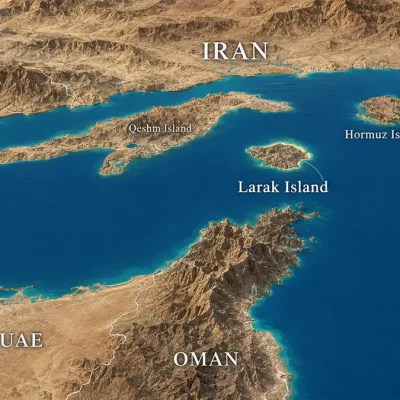


First: A vision received:
ENERGY SINCE DAILY 2020 MARKETS
TOP 5
NOW INSIGHTS
June 15, 2026
Vitol
ON AIR GI
1. STRAIT REOPENING IS NOT A PEACE DEAL
The agreement was widely viewed as a mechanism to reopen the Strait of Hormuz and reduce immediate military tensions, not a resolution of the underlying disputes. Core issues—including Iran’s nuclear program, sanctions, regional security, and frozen assets—remain unresolved, leaving significant room for renewed confrontation.
2. IRAN’S PRIORITY IS RAPID STRATEGIC REBUILDING
With shipping routes reopening, Iran is expected to maximize oil exports, replenish essential imports, and rebuild military capabilities weakened during recent conflict. The next 60 days could provide a critical window for restoring economic resilience and strengthening deterrence before any future negotiations or escalation
3. OIL MARKETS MAY BE PRICING IN TOO MUCH OPTIMISM
The sharp sell-off in oil reflects expectations of restored Gulf supply and lower geopolitical risk. However, no final agreement has been signed, insurance and shipping uncertainties remain unresolved, and key operational details are unclear, raising the possibility that markets are underestimating future disruptions.
4. ISRAEL REMAINS THE LARGEST WILDCARD
The biggest threat to sustained de-escalation is not Tehran or Washington but the possibility of independent Israeli actions. Any military escalation involving Lebanon, Iran, or regional proxies could quickly undermine confidence, disrupt energy flows, and derail efforts to normalize trade through the Strait of Hormuz.
5. GULF SECURITY ARCHITECTURE IS SHIFTING
Recent events reinforced the perception that regional security can no longer rely exclusively on U.S. protection. Gulf states are increasingly pursuing direct engagement with Iran and prioritizing regional diplomacy, potentially reshaping Middle East power dynamics and reducing dependence on external security guarantees.
GI
Publishing Intelligence Consultancy
Second: My cooment:
The first three points are logical, and the fourth is certain. Regarding the fifth point, I may first clarify the following:
In my lectures in Tokyo last month, I stated that Iran’s political objective is “the survival of the Iranian Islamic regime, with its backbone, the Iranian Revolutionary Guard Corps (IRGC), as a strong and reliable regime, both domestically and regionally.”
This political objective cannot be achieved through a military objective due to Iran’s relatively weak capabilities compared to its adversaries. Therefore, according to my view, Iran has adopted a geopolitical objective instead: “The withdrawal of the US forces from the Gulf and Iran’s restructuring of a regional security order in the Gulf to include the countries of the region as part of it.”
From this perspective, I find that the fifth point, in particular, among the five points mentioned, is the outcome that Iran is actually seeking. It is linked to the previous four points and represents what Iran desires to achieve as a final status or a solution within a comprehensive peace plan that addresses the widespread global frustration. What Iran wants to convey is that this is the current and future reality, and that the success of the agreement depends on it. This is especially true given the idea, mentioned in the fourth point, that Israel is the only potential threat to the agreement, which is logical considering the sequence of events thus far.
Third: Conclusions:
1. Israel is undoubtedly a significant source of uncertainty, but describing it as the “only potential threat” to the agreement is an analytical overstatement. Other threats include power centers within Iran, potential shifts in the US position, unintended maritime or security incidents, as well as regional actors and armed proxies.
2. The fifth point is not necessarily a fully achievable outcome. The Gulf states are already diversifying their security partnerships, but they have not yet shown a willingness to fundamentally abandon the US security umbrella. Therefore, they will focus on reducing their exclusive dependence on Washington, not replacing it with a system led by Iran or one in which they participate equally in shaping the agreement in the near future.
3. The camps opposing the agreement and supporting it will become more clearly defined, further exacerbating regional divisions.
4. The current agreement is a crisis management measure, not a conflict resolution. It is more about buying time and preventing an immediate explosion than addressing the root causes of the dispute. Therefore, the true measure of success will not be the reopening of the SoH, but rather the parties’ ability to prevent a return to escalation in the coming months.
5. Iran emerged from the crisis seeking to transform its limited military gains and the Strait of Hormuz crisis into lasting political gains. If Tehran succeeds in linking regional stability to direct dialogue, it will have achieved a strategic gain greater than any direct military victory, and the Strait of Hormuz will remain a future bargaining chip.
6. The US appears more interested in reducing the cost of its involvement than in achieving a decisive victory. American behavior suggests a desire to contain the crisis and ensure the flow of energy and market stability, rather than engaging in a protracted, open-ended confrontation.
7. The Gulf states have transformed from arenas of conflict into clearly influential players. The crisis demonstrated that Gulf capitals are no longer merely waiting for the outcome of US-Iranian understandings, but are now seeking direct influence in shaping new security and economic arrangements.
8. The success of the agreement will be measured economically before it is measured politically. If shipping, insurance, investment, and energy activity return to stable levels, the agreement will gain momentum even if the fundamental political differences remain unresolved.
9. The agreement is likely to expose differing strategic priorities among Washington, Gulf capitals, and Israel. While all parties share an interest in avoiding major regional disruption, disagreements over Iran’s future role, regional security arrangements, sanctions relief, and the pace of normalization could generate periodic tensions. However, these differences are likely to remain manageable as long as the economic and security benefits of de-escalation outweigh the costs of renewed confrontation.
Dr. Sayed Ghoneim