

The US and Iran are expected to formally sign a memorandum of understanding on June 19 in Switzerland, paving the way for 60 days of talks aimed at ending their war for good and putting strict new limits on Iran’s nuclear program.
Below is the text of the 14-point draft memorandum, as seen by Bloomberg News.
Iran’s Tasnim news agency cited an unnamed official on Wednesday as saying parts of the text published by Bloomberg are inaccurate. The report did not specify what was different. Bloomberg previously reported that there could be differences in the wording between the English and Persian versions of the MOU.
1. The Islamic Republic of Iran and the United States, together with their allies in the current war, declare upon the signing of this Memorandum of Understanding an immediate and permanent end to the war on all fronts, including Lebanon, and undertake that from now on they will not launch any hostile action against each other, and will refrain from the threat or use of force against each other. The final agreement will confirm the provisions of this Article and the remaining Articles.
2. The Islamic Republic of Iran and the United States undertake to respect each other’s sovereignty and territorial integrity, and to refrain from interfering in each other’s internal affairs.
3. The Islamic Republic of Iran and the United States undertake to negotiate and reach a final agreement within a maximum period of 60 days, extendable by mutual consent.
4. Immediately upon the signing of this Memorandum of Understanding, the United States Lift the naval blockade and prevent any interference or obstruction against the Islamic Republic of Iran, and restore traffic within a maximum of 30 days to its full capacity; the traffic of ships shall be proportional to the pre-war volume of traffic on the part of the Islamic Republic of Iran. The United States also undertakes to withdraw its forces from the surrounding areas within 30 days after the final agreement.
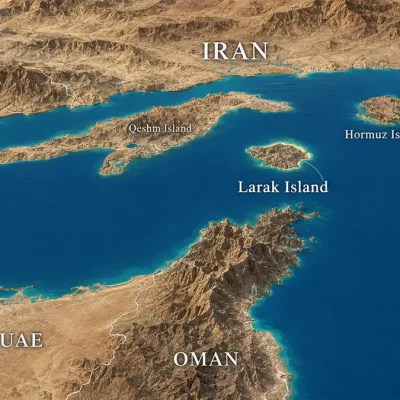
5. Upon signing this Memorandum of Understanding, the Islamic Republic of Iran will immediately take steps to ensure that the movement of merchant ships from the Persian Gulf to the Sea of Oman and vice versa is resumed within 30 days to the pre-war volume, taking into account the need for the removal of technical obstacles and the neutralization of mines by Iran.
6. The United States undertakes, together with its regional partners, to create a comprehensive plan agreed upon by both parties for the rehabilitation and economic development of the Islamic Republic of Iran, While ensuring financing of at least $300 billion. The implementation mechanism of this plan, as part of the final agreement, will be formulated within 60 days.
7. The United States commits to ending, on a schedule to be agreed upon as part of the final agreement, all types of sanctions currently facing the Islamic Republic of Iran, including resolutions of the United Nations Security Council and the Board of Governors of the International Atomic Energy Agency (IAEA), and all unilateral U.S. sanctions, both primary and secondary.
8. The Islamic Republic of Iran reiterates that it will never produce nuclear weapons. The Islamic Republic of Iran and the United States have agreed that the fate of enriched material and the fate of all other mutually agreed nuclear-related issues, including Iran’s nuclear needs, will be adequately addressed in a final agreement; the final agreement will confirm the provisions of this Article.
9. The Islamic Republic of Iran and the United States agree that, pending a final agreement, they will maintain the status quo: Iran will maintain the status quo on its nuclear program, and the United States will not impose new sanctions on Iran or strengthen its forces in the region.
10. The United States undertakes that immediately after the signing of this Memorandum of Understanding, and until the date of the lifting of sanctions, the United States Treasury Department will issue waivers for exports of Iranian crude oil, petrochemical products and their derivatives, and all related services, including banking, insurance, transportation, and the like.
11. The United States undertakes that, in light of the progress of negotiations towards a final agreement, frozen or restricted funds and assets of the Islamic Republic of Iran will be released and made fully available. These funds, whether held in the master account or transferred, will be used for any final beneficiary payment determined by the Central Bank of the Islamic Republic of Iran and will be fully available for use. The United States undertakes to issue all necessary permits and licenses on this basis.
12. The Islamic Republic of Iran and the United States agree that an implementation mechanism will be established to oversee the successful implementation of and future commitment to the Final Agreement.
13. Following the signing of this Memorandum of Understanding, and upon receipt of assurances regarding the commencement of implementation of Articles 4, 5, 10, and 11 of this Memorandum of Understanding, and the continued implementation of these steps, the Islamic Republic of Iran and the United States will enter into negotiations for a Final Agreement solely with respect to the remaining Articles.
14. The final agreement will be approved through a binding resolution of the UN Security Council.
Conclusions:
In my opinion, without a doubt, Iran is the biggest beneficiary.
Two perspectives can be considered for clarification: the scope of interests and the scope of the agreement.
From the perspective of interests, the memorandum leans more towards Iran’s economic and political interests. However, it leans more towards the United States’ security and strategic interests, albeit to varying degrees.
From the scope of the agreement, which perhaps weighs the actual gains and losses, I believe that Iran reaps the greatest benefits in the short and medium term. This is because Iran obtains a cessation of hostilities and an end to direct military pressure, the resumption of oil exports, the gradual lifting of US and international sanctions, the release of frozen assets, a $300 billion economic rehabilitation plan, and implicit US recognition of the Iranian regime and its negotiation as a legitimate partner. This is particularly significant with the Trump administration and Netanyahu’s presence. Furthermore, the current text does not demand the dismantling of the nuclear program or the immediate surrender of nuclear materials, but rather postpones the details to the final agreement.
In return, the United States receives an Iranian pledge not to acquire nuclear weapons, a freeze on the current nuclear status during negotiations, the reopening of the Strait of Hormuz and the securing of navigation, a de-escalation of regional tensions and an end to the war, and the removal of the risk of a large-scale and costly military confrontation. All of these are reversible, and I see them as temporary fixes.
Here, we find the United States paying most of the price upfront, while postponing obtaining most of the nuclear guarantees until the final agreement after 60 days. This is not usually the preferred formula for the American negotiator.
If the final negotiations subsequently fail, Iran will have already secured a significant portion of the economic and political gains, while the United States will have obtained only a temporary reprieve. Therefore, an initial reading of the text indicates that the current balance of power is more in Iran’s favor than the United States’, unless the secret annexes or the final agreement include strict, currently undisclosed nuclear restrictions.
The significant repercussions we are discussing, the latest of which was this morning, are as follows:
1. Iran will use the funds that will be released to rebuild its strength, support its proxies, and restore the efficiency of its missile program.
2. Iran could exploit the threat of closing or closing the Strait of Hormuz at any time it feels threatened. Incidentally, it’s not Iran that closes the Strait, but rather the shipping and cargo insurance companies that raise premiums or refuse to insure.
3. Iran is taking steps to reshape the regional security system in the Gulf region. Simultaneously, Gulf states with ports outside the Strait’s main channel are utilizing them, thereby reducing their dependence on the Strait of Hormuz to “zero”.
Dr. Sayed Ghoneim