

FROM ANOTHER PERSPECTIVE – DIFFERENT COUNTRIES, INTERSECTING INTERESTS
Update: 13:00 Abu Dhabi time, Tuesday, October 20, 2026
Escalating Houthi attacks against Saudi Arabia require a reassessment of regional and international defense arrangements, given the continuing military partnership with the United States, the range of European contributions, steps to implement the Mecca Agreement among Saudi Arabia, Türkiye, and Pakistan, Egypt’s readiness to expand its military participation in protecting the Kingdom, and reports of Israeli intelligence assistance.
These developments indicate that Saudi Arabia is moving toward a multinational defense network whose contributions and commitments vary in nature and scope, without necessarily constituting a military alliance under a publicly announced unified operational command.
In my assessment, the significance of this development lies in the additional military value provided by each country, the integration of capabilities, and the alignment of interests, beyond the number of participating states. The assessment must also distinguish between protecting Saudi territory and decisively resolving the war inside Yemen, between political commitments and their operational implementation, and between intelligence sharing and direct combat participation.
1. Developments in the Situation
Houthi Attacks and the Saudi Response
Houthi missile and drone attacks against Saudi cities, airports, and critical facilities have continued, accompanied by reports of casualties and disruptions to air traffic, demonstrating the threat’s impact on the economy and civilian life. Saudi Arabia continues its air and missile defense operations while supporting Yemeni government forces, particularly along the western coast and near Bab el-Mandeb.
On October 19, the Houthis targeted a training camp for Yemeni government forces in Shabwa Governorate with three ballistic missiles, according to local sources. The attack resulted in 53 deaths and left approximately 200 people wounded. The Houthis claimed responsibility, alleging that the camp was operated by Saudi forces—a claim for which there is no independent confirmation. The attack underscores the Houthis’ continued ability to carry out significant strikes against opposing forces, a factor that could complicate government operations aimed at reclaiming territories under Houthi control.
The Mecca Agreement
The October 5 meeting among Saudi Arabia, Türkiye, and Pakistan saw announced steps toward implementing defense commitments and providing agreed forces and capabilities, without an announcement that deployment had been completed or a joint operational command established. Pakistan’s military presence predating the agreement remains distinct from any new missions or capabilities introduced under it; likewise, Turkish defense cooperation does not necessarily imply the deployment of combat troops inside Saudi Arabia.
Egypt’s Position
Egypt has participated in the Saudi-led coalition since 2015 through naval and air contributions, particularly to secure navigation in the Red Sea and Bab el-Mandeb, without extensive ground intervention inside Yemen.
In October 2026, Egypt announced its readiness to take the necessary measures to protect Saudi Arabia, subject to completion of constitutional requirements. On October 18, Egypt’s National Defense Council reaffirmed its support for the Kingdom, without announcing the final composition or missions of any prospective forces.
On October 19, reports indicated that a parliamentary vote was expected the following week regarding the authorization of the Egyptian armed forces to contribute to the defense of Saudi Arabia, should the Kingdom request such support. The specific nature of this involvement, the size of the forces, and their assigned tasks remain contingent upon the completion of constitutional procedures and the issuance of executive decisions.
Political coordination among Egypt, Saudi Arabia, Türkiye, and Pakistan within the R4 grouping has also reinforced solidarity with the Kingdom, without implying the establishment of a four-party military alliance.
The Emirati Position
The UAE has affirmed its support for Saudi Arabia’s security. Political and military communications between the two nations have intensified, including a visit by the Saudi Minister of Defense to Abu Dhabi on October 18 and a call between the two countries’ foreign ministers on October 19. Furthermore, press reports on October 17 indicated a Saudi-Emirati understanding to resume Emirati funding for certain anti-Houthi Yemeni forces—most notably the Giants Brigades—in exchange for Saudi Arabia providing them with air cover.
This suggests the potential for a resumption of indirect military cooperation within Yemen, though the actual implementation of these arrangements remains to be confirmed. There is no sufficient public information regarding any Emirati decision to deploy combat troops or air defense systems to Saudi Arabia.
The United States
The United States remains Saudi Arabia’s principal military partner in armaments, intelligence, training, and air and missile defense, despite not being a formal member of the Saudi coalition against the Houthis. It has previously conducted independent military operations against the Houthis, including strikes in 2025. The possibility of renewed intervention depends on developments in threats to American and Saudi interests; political statements should not be treated as decisions to launch new operations.
Israel
Reports since September, including further accounts on October 18, have described Saudi–Israeli contacts mediated by the United States and possible intelligence assistance concerning early warning and information on Houthi targets. However, insufficient public information is available to establish the scale or operational use of such assistance, or the deployment of Israeli forces or defense systems inside the Kingdom.
In statements on October 16, Trump also linked Israeli assistance to the prospect of progress toward normalization, without a Saudi announcement changing its political position or accepting Israeli combat participation.
Multinational Maritime Arrangements in the Red Sea
Military maritime arrangements in the Red Sea, Bab el-Mandeb, and the Gulf of Aden include Combined Task Force 153 (CTF-153), Operation Prosperity Guardian, the European Union’s Operation ASPIDES, and the US–UK Operation Poseidon Archer, which targets Houthi military capabilities.
A new Saudi-led maritime coalition involving 14 countries has also been announced to enhance the security of sea lanes and protect trade and energy supplies. Its formation, deployment, and command arrangements still require verification.
These arrangements differ in their missions, command structures, and rules of engagement, making coordination essential to improving maritime protection and avoiding duplication of effort.
2. Classification of Countries by the Nature of Their Participation
Countries That Participated Previously and Subsequently Changed Their Involvement
Egypt: Has participated with naval and air forces since 2015, with a role linked to Red Sea and Bab el-Mandeb security. The possibility of expanding its participation into new defensive missions to protect Saudi Arabia is currently under consideration.
The UAE: It has been involved militarily since 2015, though it later scaled back its direct intervention while maintaining its ties with local Yemeni factions. Recent reports point to a potential understanding with Saudi Arabia to resume support for some of these forces, though there is no confirmation that new Emirati troops will be deployed within the Kingdom.
Bahrain: Participated in coalition operations, with its military role continuing to be linked to Gulf defense cooperation and its close security relationship with Saudi Arabia.
Countries with Continuing Defensive Contributions
United States: Provides key capabilities in intelligence, early warning, missile defense, command and control, and armaments.
Greece: Has contributed a Patriot battery and operating crews since 2021, with the mission continuing during the current crisis.
Pakistan: Maintains military cooperation and a troop presence predating the Mecca Agreement, with the possibility of additional missions and capabilities.
United Kingdom: Continues military cooperation, training, arms supplies, and defensive support.
Countries That Have Announced or Begun Reinforcing Their Contributions
France: Has moved to strengthen defensive support with additional personnel, equipment, and capabilities, while it remains important to distinguish announcements from completed operational deployment.
Türkiye: Its defensive, technical, intelligence, and logistical contributions are developing through bilateral relations and the Mecca Agreement, without sufficient public confirmation of Turkish combat troops being deployed inside the Kingdom or carrying out offensive operations in Yemen.
A Country Reportedly Providing Possible Intelligence Assistance
Israel: Reported assistance centers on warning, surveillance, and information about Houthi capabilities, without sufficient public evidence of direct combat participation or integration into a joint command.
3. Positions of the Gulf Cooperation Council States
GCC states agree on the importance of Saudi security and reject Houthi attacks, but differ in their interests inside Yemen and willingness to bear additional military burdens.
- Saudi Arabia: Seeks to protect its population, facilities, and economy and restore deterrence, while supporting Yemeni government forces and balancing escalation with de-escalation.
- The UAE: It supports Saudi Arabia’s security while safeguarding its own interests in southern Yemen and the Red Sea. I anticipate that its military cooperation will focus on supporting local Yemeni forces, as well as coordinating on intelligence, defense, and maritime matters with Saudi Arabia. Meanwhile, any direct combat involvement will remain contingent upon the nature of Saudi requests and a shared understanding regarding the future of Yemen.
- Bahrain: Is likely to continue its political and military support for Saudi Arabia within its capabilities and existing Gulf arrangements.
- Kuwait: Leans toward Gulf solidarity and defensive, information-sharing, and logistical contributions while avoiding large-scale offensive operations.
- Qatar: Combines support for Saudi security with the preservation of its diplomatic role and de-escalation efforts.
- Oman: Prioritizes the security of its border with Yemen, mediation, and de-escalation, and is unlikely to participate in offensive operations against the Houthis.
In my view, these differing positions allow roles to be distributed across defense, logistical support, and mediation without requiring identical levels of participation from all states.
4. Intersecting Interests and Geopolitical Paradoxes
Greece and Türkiye
Greece is actively contributing to Saudi air defense, while Türkiye’s contribution is developing within a different framework despite their disputes in the Aegean Sea and Eastern Mediterranean. Riyadh benefits from relations with both countries without adopting their disputes, although this does not guarantee direct military coordination between them.
The United States and Europe
Their interests intersect in protecting energy, navigation, and stability, although their calculations regarding influence and defense industries differ. European contributions remain complementary to American capabilities rather than substitutes for them.
Türkiye and Pakistan
Both are parties to the Mecca Agreement, but Türkiye is interested in expanding its influence and defense exports, while Pakistan balances its commitments to Saudi Arabia against its relations with Iran. This may lead to differing willingness to undertake new combat missions.
Saudi Arabia and Israel
Their interests overlap in reducing the Houthi threat and protecting navigation, without implying identical political objectives. Israel may seek to use security cooperation to advance normalization, while Saudi Arabia weighs the military benefits against political sensitivities associated with the Palestinian issue and its regional relationships.
Saudi Arabia and the UAE
The interests of both countries converge in confronting the Houthi threat and safeguarding the security of the Gulf and the Red Sea, even as their calculations regarding local factions and the future of southern Yemen continue to diverge. A potential understanding on supporting Yemeni forces could allow for a division of roles—with the UAE providing funding and logistical support, while Saudi Arabia offers air cover. The effectiveness of this cooperation will depend on the alignment of operational objectives, the establishment of command-and-control arrangements, and a shared understanding of the political and security situation in areas that might be reclaimed by anti-Houthi forces.
Egypt and Other Partners
Egypt’s interests are linked to the security of Saudi Arabia, the Red Sea, Bab el-Mandeb, and the Suez Canal, without implying that its military objectives coincide with those of all partners. It can undertake defensive missions under independent bilateral arrangements without joining the Mecca Agreement. Likewise, the possible receipt of Israeli-origin information through American channels does not constitute a joint Egyptian–Israeli command.
5. Strategic Assessment
The Nature of the Saudi Defense Model
I assess that Saudi Arabia is moving toward diversifying partnerships and sharing burdens while continuing to rely on the United States for key capabilities, particularly intelligence, early warning, missile defense, and command and control. This model gives Riyadh political and military flexibility, but complicates coordination among forces with different missions, systems, rules of engagement, and limits of commitment.
The challenge, therefore, is not necessarily to establish a unified alliance, but to achieve operational integration among independent national contributions. This challenge extends to the maritime domain, where international and regional forces and operations overlap in the Red Sea and Bab el-Mandeb. The new Saudi-led maritime coalition could strengthen the Kingdom’s role in coordinating maritime security, provided that it contributes actual operational capabilities and coordinates with existing arrangements without duplicating missions or creating conflicts in command and rules of engagement.
The Mecca Agreement and the Test of Added Value
I do not consider the signing of the agreement or the continuation of Pakistan’s pre-existing military presence sufficient evidence of operational activation. The true measure is the additional forces, capabilities, and missions it introduces, and progress in planning, coordination, and command and control.
Reports suggest possible developments in Pakistan’s participation, including fighter aircraft and air operations against Houthi targets, while Türkiye’s publicly announced contribution focuses more on defensive, technical, intelligence, and logistical support. Details of any new operations still require independent verification.
In my assessment, a combat mission undertaken by one member state does not automatically mean that the other members participate in it or that a joint operational command exists.
The Military Value of Egyptian Participation
Egypt’s previous participation since 2015 provides important operational experience and strategic context, but does not create an automatic obligation to undertake a new mission. If participation is decided, I expect it initially to focus on air and missile defense, counter-drone operations, early warning, reconnaissance, electronic warfare, and possibly air and naval support.
The added value will depend on the capabilities assigned, clarity of missions, rules of engagement, command and control, logistical sustainability, and the independence of Egyptian military decision-making.
I consider it necessary to distinguish between defending Saudi territory and conducting offensive operations inside Yemen, with the scope, cost, and duration of participation defined in accordance with Egyptian interests and constitutional procedures.
Prospects for US Military Intervention
Scenario One — Expanded Defensive Participation (Most Likely): Increased intelligence support, early warning, and air and missile defense, potentially including direct participation in intercepting threats directed at Saudi Arabia.
Scenario Two — Limited Offensive Operations (A Plausible Possibility): Independent US air or naval strikes against Houthi military targets, particularly if US forces or interests come under attack or threats to navigation and critical facilities escalate.
Scenario Three — A Broad Offensive Campaign (Least Likely): Sustained operations by US Central Command aimed at decisively weakening the Houthis and changing the military situation inside Yemen.
I consider the first scenario the most likely, with a possible shift to the second if threats to American interests expand. Washington does not need to join the Saudi coalition formally to conduct independent operations, but it will weigh restoring deterrence against the risks of attrition, escalation with Iran, and domestic considerations ahead of the midterm elections.
The Israeli Role and the Future of Normalization
I divide the potential Israeli role into three levels:
Intelligence assistance: Warning, surveillance, and information on Houthi capabilities and targets; this is the most feasible level in the near term.
Technical defensive cooperation: May include sharing expertise in countering missiles and drones and improving warning and tracking, but would require political, technical, and security arrangements.
Direct combat participation: Could theoretically include interceptions or strikes against Houthi targets, but is the most politically sensitive level, and insufficient public information exists to establish Saudi–Israeli arrangements for its implementation.
Operationally, targeting intelligence differs from the tracking data required for interception, while intelligence assistance cannot compensate for ammunition shortages or gaps in defensive coverage.
Politically, Washington and Israel may seek to use security cooperation to advance normalization, but Riyadh is not obliged to convert military assistance into diplomatic recognition.
The Palestinian issue remains a major factor in the Saudi position, while announcing direct Israeli participation could heighten regional sensitivities and provide the Houthis with propaganda material.
I therefore distinguish among converging security interests, operational military cooperation, and diplomatic normalization: progress in one does not automatically produce the others.
Defensive Integration and the Challenge of Attrition
The crisis highlights the need for a layered air and missile defense system linking early warning, sensing, interception, electronic warfare, and the management of ammunition and reserves.
Integration cannot be achieved simply by adding Patriot and THAAD systems. It requires coordination of air-defense sectors and engagement procedures, timely information exchange, clear command-and-control authority, and the preservation of national decision-making autonomy.
Conversely, the Houthis can sustain military and economic pressure without achieving significant hits in every attack, by depleting interceptor stocks, straining systems and crews, and disrupting aviation and facilities.
High interception rates, therefore, do not necessarily indicate successful strategic deterrence. Saudi Arabia needs to combine active defense with passive protection of facilities, rapid restoration of operations, and reduced economic costs from attacks.
The economic repercussions of the escalation have extended to major investment activities, with the announcement that the Future Investment Initiative conference in Riyadh—originally scheduled for October 19—has been postponed, though no official statement has explicitly linked this delay to the Houthi attacks. This underscores the importance of evaluating the effectiveness of Saudi Arabia’s defenses not only in terms of intercepting military threats, but also in their capacity to safeguard the continuity of economic activity.
Defending Saudi Arabia and Resolving the War in Yemen
Saudi territory and facilities can be better protected by improving defenses and integrating capabilities, but changing the military situation inside Yemen requires different conditions.
In my view, altering the military situation within Yemen requires Yemeni forces capable of regaining operational initiative, effective leadership, coordination among various units, sustained air support, and a clear political and security vision for the post-operational phase.
A potential Saudi-Emirati understanding regarding support for Yemeni forces—most notably the Giants Brigades—could offer an opportunity to enhance their capabilities, provided that the implementation of such an agreement is verified and that differences concerning the future of southern Yemen are addressed. Ultimately, the success of these operations remains contingent upon the integration of external support with field leadership, effective coordination among Yemeni forces, and the establishment of viable political and security arrangements.
Calculations of Escalation and De-escalation
Attacks causing substantial Saudi losses could prompt expanded operations inside Yemen, but this would entail risks of attrition and a wider war.
Iran influences the parties’ calculations as a supporter of the Houthis, without assuming full Iranian control over their operational decisions. Direct American or Israeli intervention could also increase the linkage between the Yemeni front and the wider regional confrontation.
I believe Riyadh must balance the cost of intervention against the cost of refraining from it, while maintaining diplomatic channels capable of limiting escalation.
6. Conclusions
- Saudi Arabia is moving toward a multinational defense network, with the United States remaining its principal partner, while sufficient public evidence of a unified operational command covering all participants is lacking.
- The effectiveness of the Saudi defense model depends on added military value and operational integration among national contributions and multinational maritime arrangements, as well as coordination between existing forces and the new maritime coalition, alongside the number of participating states and the scale of announced political commitments.
- The Mecca Agreement provides a framework for developing defense cooperation, but assessing its activation requires verification of new forces, capabilities, and missions rather than reliance on pre-existing military deployments or implementation decisions alone.
- Egypt has a history of military participation in the coalition since 2015 and enduring interests in Red Sea and Bab el-Mandeb security, making its current readiness a potential expansion of an existing role into new defensive missions.
- The United States can expand its defensive participation or conduct independent strikes against the Houthis without formally joining the Saudi coalition, while a commitment to a broad campaign to resolve the war inside Yemen remains less likely.
- Reports of Israeli intelligence assistance do not establish the existence of a Saudi–Israeli alliance or direct combat participation, and potential security cooperation does not automatically lead to diplomatic normalization.
- The divergence in the positions of Gulf states allows for a distribution of military and diplomatic roles; potential Saudi-Emirati cooperation in supporting Yemeni forces could serve as a model for burden-sharing within Yemen. Its effectiveness, however, remains contingent upon ensuring its implementation and reaching a consensus regarding the future of southern Yemen.
- Defending Saudi Arabia remains distinct from decisively resolving the war in Yemen, while continued Houthi attacks cause military and economic attrition even if interception effectiveness improves.
7. Future Perspective
- The Houthis will continue using missiles and drones to deplete Saudi defenses and maintain pressure on the economy and critical facilities.
- Saudi Arabia will continue expanding its defense partnerships, with European, Turkish, and Pakistani contributions developing at different rates and the United States remaining its principal partner.
- Implementation of the Mecca Agreement may advance gradually, with Türkiye and Pakistan differing in their willingness to undertake new combat missions, particularly inside Yemen.
- American defensive support will continue, with the possibility of limited offensive strikes if US interests, navigation, or critical Saudi facilities face major threats; a broad campaign remains less likely.
- If procedures for new Egyptian participation are completed, it will be defensive and specialized, under arrangements that preserve Egyptian decision-making independence and draw on previous military experience.
- I expect possible Saudi–Israeli intelligence cooperation to remain limited and indirect, without a rapid move toward publicly declared combat participation or full diplomatic normalization.
- Gulf solidarity with Saudi Arabia will continue, and Saudi-Emirati coordination to support the anti-Houthi Yemeni forces is likely to develop, while the deployment of new Emirati combat forces inside Saudi Arabia remains linked to the development of bilateral threats and understandings.
- Operations inside Yemen could expand if Saudi Arabia suffers major losses, but prospects for a decisive outcome will remain limited without improved effectiveness and coordination among anti-Houthi Yemeni forces. The heavy losses sustained by Yemeni government forces may increase the need to reorganize them and strengthen their protection before expanding offensive operations.
- The need for integrated air and missile defense and countermeasures against low-cost drones will grow, alongside continued efforts to de-escalate and avoid a broader confrontation with Iran.
8. Strategic and Operational Measures for Participating States
- Define the objectives of multinational participation precisely and distinguish between protecting Saudi Arabia and supporting military operations inside Yemen, preventing uncontrolled mission expansion.
- Establish a multinational operational coordination mechanism defining areas of responsibility, information exchange, and engagement procedures while preserving each state’s national command autonomy. Coordinate maritime missions among the new Saudi-led coalition, CTF-153, Operation Prosperity Guardian, and ASPIDES to prevent duplication and improve navigation security in the Red Sea and Bab el-Mandeb.
- Prioritize a layered air and missile defense system combining early warning, interception, electronic warfare, and passive protection, supported by sustainable management of defensive stocks.
- Periodically assess the additional military value of the Mecca Agreement and external contributions based on newly operational capabilities and achieved operational results.
- Egypt should link any new participation to a defined defensive mission, a clear legal framework, approved rules of engagement, and independent command-and-control arrangements, specifying the mission’s duration, cost, and mechanisms for review or termination. It should draw on Egypt’s previous coalition and Red Sea security experience and prepare the selected forces and capabilities according to the requirements for defending Saudi territory and facilities.
- Distinguish intelligence exchange from joint command arrangements, particularly when dealing with information that may originate from Israel, and avoid automatically linking security assistance to normalization.
- Strengthen coordination among Saudi Arabia, the UAE, and the anti-Houthi Yemeni leadership; unify the objectives of support, operational planning, and intelligence sharing; and reach an agreement on arrangements for the administration of recovered territories—all with the aim of curbing rivalry among local factions and enhancing the effectiveness of operations within Yemen.
- Maintain de-escalation channels and diplomatic communication alongside stronger defenses, reducing the likelihood of a wider war and prolonged attrition.
9. Final Assessment
I assess that Saudi Arabia is moving toward a multinational defense model based on diversified partnerships and burden-sharing, while retaining its partnership with the United States as the principal pillar.
The model’s strength lies in its flexibility and multiple sources of support, while its central challenge is turning different contributions into integrated and sustainable capabilities despite differences in states’ interests and the limits of their commitments.
Egypt stands out as a military partner with previous participation and direct strategic interests in the security of the Red Sea and Bab el-Mandeb, with the possibility of expanding its role into new defensive missions to protect Saudi Arabia.
In my assessment, the real test, beyond the number of countries prepared to defend Saudi Arabia, lies in their ability to deliver tangible military value without imposing political or operational commitments that exceed the defined objectives.
Riyadh’s most important strategic challenge remains restoring deterrence and protecting the economy and society without becoming trapped in a prolonged war of attrition that cannot guarantee a decisive resolution of the conflict inside Yemen.
Sayed Ghoneim, PhD
Major General (retired) of the Egyptian Armed Forces
Chairman, Institute for Global Security & Defence Affairs (IGSDA), UAE
www.igsda.org
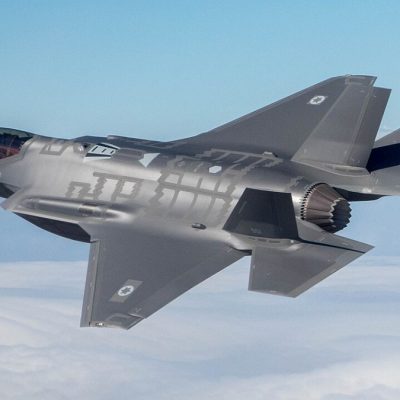
Cover image: Royal Saudi Air Force F-15 (public domain).
Sources
- Open sources.
- Private sources.
References
- Ministry of Foreign Affairs of Pakistan. (5 October 2026). Joint Statement: Emergency Meeting of the Strategic Political and Defense Committee of the Makkah Alliance for Defense, Riyadh.
- Al Jazeera English. (5 October 2026). Türkiye, Pakistan Agree Saudi Arabia Military Deployment Under Mecca Pact.
- Al Jazeera English. (11 August 2026). What Are Saudi Arabia, Türkiye and Pakistan’s Joint Military Capabilities?
- Reuters. (19 October 2026). Houthi Attack Kills 53 at Yemen Government Training Camp, Officials Say.
- Associated Press. (19 October 2026). Houthi Rebels Strike Yemen’s Government Forces, Killing at Least 53.
- Reuters. (19 October 2026). Egypt Delays Vote on Military Support for Saudi Arabia Until October 26.
- The Wall Street Journal. (19 October 2026). Saudi Arabia’s Military Limitations Are Being Exposed by Houthi Attacks.
- Financial Times. (15 October 2026). What’s at Stake in the Saudi-Houthi Conflict? The Rachman Review.
- Combined Maritime Forces. (2026). Combined Task Forces: CTF 150, CTF 151, CTF 152, CTF 153 and CTF 154.
- U.S. Naval Forces Central Command. Combined Maritime Forces: Mission, Membership and Operational Structure.
- Australian Department of Defence. (26 March 2025). RAN Passes Baton on Red Sea Mission.
- Australian Department of Defence. (24 April 2025). Australia Hands Over Command to Egypt.
- U.S. Naval Forces Central Command Public Affairs. (12 June 2023). Egypt Turns Over Command of Multinational Red Sea Task Force.
- Council of the European Union. (23 February 2026). Red Sea: Council Extends the Mandate of Operation ASPIDES to Safeguard Freedom of Navigation.
- Council of the European Union. (30 March 2026). Maritime Security: Council Updates Mandates of EU Naval Operations ASPIDES and ATALANTA.
- European External Action Service. (27 May 2026). EUNAVFOR ASPIDES Mandate.
- European External Action Service. About the Operation EUNAVFOR ASPIDES.
- The Guardian. (19 October 2026). Houthi Attack Kills 53 in Biggest Single Loss of Life Since Yemen Civil War Reignited.
- Confidential Sources. Non-Public Information and Expert Consultations Concerning Regional Military Developments and Defense Cooperation.