


An Applied Field Study in Japanese Schools Based on the A.S.H.A.P 6Es FIP Framework and the Sustainable Development Goals (SDGs)
Prepared by: Dr. Hussein Zanaty, Member of the Academic and Research Board, Institute for Global Security and Defense Affairs (IGSDA)
Academic Field: Global Studies & International Education
Pedagogical Determinants: Experimental Design Thinking – Project-Based Learning (PBL) – Media and Information Literacy (MIL) – Sustainable Development Goals (SDGs)
Abstract
The influx of fake and misleading information flowing through social media platforms has emerged as one of the most intricate structural challenges threatening the awareness of children and youth in the digital age. Its ramifications are no longer confined to transmitting inaccurate data; they have expanded to reframe cultural and social perceptions, compromise value systems, and erode critical judgment, thereby blurring the distinctions between fact, opinion, and subjective assumption (Howard et al., 2021).
Consequently, there is a pressing imperative to develop the operational scope of educational institutions beyond sheer abstract knowledge transmission toward fostering independent learner agency, cultivating critical thinking and systematic inquiry competencies, embracing cultural pluralism, and engaging responsibly with universal humanitarian issues (UNESCO, 2021).
This academic paper presents a series of pioneering, applied pedagogical experiences implemented in the field with elementary and junior high school students in Japan, including schools in the town of Yasaka, Kyotango City, Kyoto Prefecture. These interventions sought to develop precise observation, deductive analysis, and digital verification skills, while instilling universal empathy and awareness of shared global causes (Zanaty, 2023).
Furthermore, this study establishes the foundation for the A.S.H.A.P (All Share Humanity And Peace) framework via the 6Es pedagogical engine and the FIP (Form, Inform, Perform) instructional pathway. This integrated model converges Experiential Learning and Design Thinking, aligning directly with the United Nations Sustainable Development Goals (United Nations, 2015), OECD educational policy directives (Hill, 2022; OECD, 2021), and the European Commission’s updated guidelines on tackling disinformation (European Commission, 2026).
Keywords: Digital Disinformation, Media and Information Literacy (MIL), Critical Thinking, Experimental Design Thinking, International Education, Global Citizenship, A.S.H.A.P, FIP Model, Sustainable Development Goals (SDGs).
Section I: Introduction – Cognitive Awareness Challenges in the Digital Age
The rapid and unregulated deluge of data across social networking platforms has precipitated a radical transformation in the learning and knowledge-acquisition landscape for youth. Young individuals have gained instantaneous access to a torrent of images, video streams, news reports, and digital commentary without necessarily possessing the methodological capabilities required to verify their authenticity or interpret their human context (European Commission, 2026).
The systemic threat of modern digital manipulation lies in what UNESCO literature on journalism and fact-checking identifies as “contextual disinformation” (Ireton & Posetti, 2018). In such scenarios, authentic visual assets are repurposed by extracting them from their original spatiotemporal settings or embedding them beneath emotionally charged, polarizing headlines designed to conceal vital context, all amplified by recommendation algorithms that trap learners within closed filter bubbles.
As OECD findings on 21st-century reading proficiencies demonstrate (OECD, 2021), the core dilemma confronting students today is not accessing written materials, but mastering the critical acumen required to differentiate factual evidence from targeted persuasion within open online environments. Consequently, confronting this phenomenon cannot be reduced to administrative restrictions and technical censorship. It demands building intrinsic cognitive resilience, empowering the learner to execute conscious analysis and methodical cross-examination prior to endorsing or redistributing digital content. This constitutes the fundamental mission of international education: broadening cognitive horizons and equipping learners to perceive global realities through diverse perspectives (UNESCO, 2021).
Section II: The Quintuple Impact of Disinformation on Youth Consciousness
International scholarship, prominently represented by UNICEF Innocenti’s research report (Howard, Neudert, & Prakash, 2021) and OECD policy analyses on children’s media literacy (Hill, 2022), identifies five dimensions through which digital disinformation impacts youth:
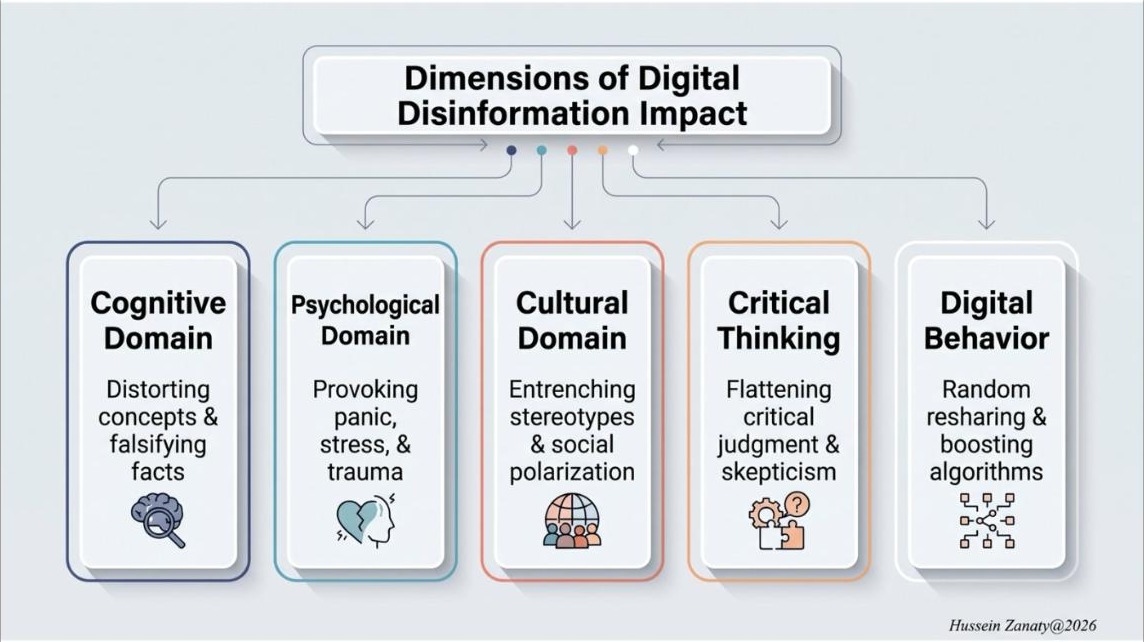
- Cognitive and Epistemic Level: Distorting objective facts and constructing inaccurate impressions of events, cultures, and populations due to reliance on biased or fragmented accounts, thereby undermining foundational knowledge building (Howard et al., 2021).
- Psychological and Emotional Level: Triggering acute anxiety, fear, apprehension, or hostility, while exploiting emotional triggers within systematic social engineering maneuvers that compromise the emotional well-being and psychological equilibrium of the child.
- Cultural and Social Level: Cementing prefabricated prejudices against other civilizations and communities, thereby feeding insular mindsets and ideological polarization at the expense of intercultural dialogue and global citizenship (UNESCO, 2021).
- Critical Thinking Level: Inducing atrophy of rational inquiry, cultivating passive content consumption, and weakening methodical doubt and comparative verification, which degrades evaluative literacy skills (OECD, 2021).
- Communicative Behavioral Level: Drawing youth into the unverified redistribution of rumors and manipulated assets, turning them into unconscious conduits that algorithmically amplify disinformation campaigns (Hill, 2022).
Section III: The Ecological Model of Integration (Family – School – Digital Sphere)
Tackling digital disinformation necessitates a collaborative, ecological paradigm wherein institutional and societal actors play synchronized roles (European Commission, 2026; Hill, 2022):
- The Family: The primary incubator of digital awareness. Its responsibility is to cultivate secure channels of constructive dialogue, creating a psychological sanctuary where children feel empowered to share questionable encounters without fearing punitive sanctions or arbitrary device bans (Howard et al., 2021).
- The School: The pedagogical laboratory tasked with furnishing students with analytical toolkits, logical deduction, and investigative techniques through curricular and extracurricular activities that elevate active discovery above rote memorization (UNESCO, 2021).
- Media and Digital Platforms: The ethical commitment to responsible information dissemination, the provision of accessible reporting and protection mechanisms designed for children, algorithmic transparency, and the protection of minors’ privacy rights (Ireton & Posetti, 2018).
Section IV: The Japanese Experience – Institutional Discipline and Active School Environments
Educational policy in Japan provides an operational paradigm that balances administrative order with balanced pedagogical environments. Grounded in institutional directives from the Ministry of Education, Culture, Sports, Science and Technology (MEXT, 2020), Japanese schools enforce regulatory frameworks governing the entry and utilization of mobile devices on school grounds, with exemptions reserved for transit safety and verified emergencies.
Philosophical Significance of the Japanese Model:
The Japanese educational system does not view these administrative parameters as a standalone panacea for digital disinformation. Rather, they are regarded as a deliberate pedagogical architecture designed to foster direct, real-world human interactions (Face-to-Face Interaction). This environment preserves dedicated space for holistic collaborative routines (Tokkatsu), peer projects, and experiential laboratory work, building practical reasoning and personal accountability prior to encountering unmoderated online spaces (MEXT, 2020; Zanaty, 2023).
Section V: Applied Pedagogical Interventions in Japanese Schools
Drawing upon sustained field practice with elementary and junior high school cohorts in Japan, specifically within the municipal jurisdiction of Yasaka, Kyotango City, Kyoto Prefecture (Zanaty, 2023), a curated suite of interactive interventions was deployed to fuse technical verification with human empathy:
1. Activity One: “Explore, Analyze, and Conclude”
- Design & Execution: Collaborative discovery workshops wherein student teams examined viral internet materials, contrasting authentic captures with synthetically manipulated or contextually displaced media, guided by UNESCO journalism training manuals (Ireton & Posetti, 2018).
- Operational Inquiries: Learners moved through deductive steps to address core questions:
– What explicit visual elements are genuinely present in the frame?
– Are there traceable artifacts of synthetic tampering or artificial intelligence processing?
– What is the primary source repository and verifiable capture timestamp?
– Does the framing crop out vital details of the broader scenario? - Educational Outcome: Overriding immediate emotional assumptions, cultivating a habit of systematic deduction, and demanding verified evidence before passing judgment, in alignment with UNESCO MIL benchmarks (UNESCO, 2021).
2. Activity Two: “Careful Observation: Who is Crying and Sad?”
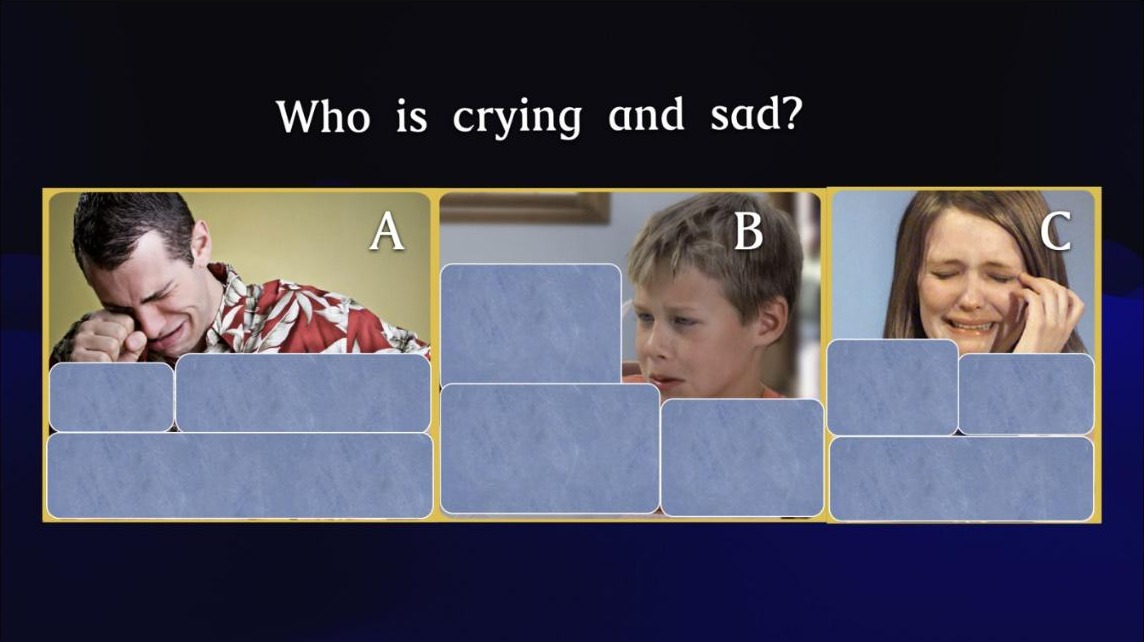
- Design & Execution: An analytical visual assessment displaying three portraits of individuals weeping intensely, with environmental surroundings cropped out to obscure true contextual indicators, illustrating the divide between reality and hasty emotional inference (Hill, 2022).
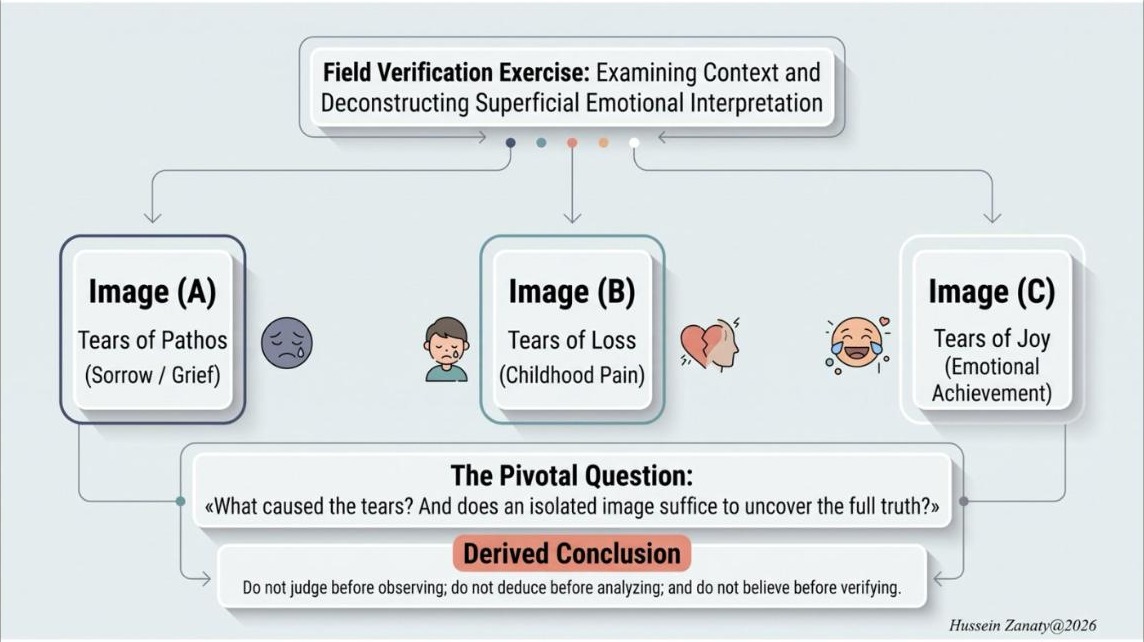
- The Core Inquiry: “What triggered the weeping? Can we confirm the emotional state relying exclusively on facial expressions?”
- Analytical Trajectory: The isolated frames initially led learners to assume feelings of sorrow and anguish. Progressively revealing the complete scenes demonstrated diverse realities: tears of joy following an athletic triumph, tears of empathy, and tears provoked by transient physical discomfort.
- Educational Outcome: Reinforcing the golden axiom: “Do not judge before observing, do not deduce before analyzing, and do not believe before verifying,” demonstrating how truncated data creates deceptive impressions that spawn prejudice and misinformation (OECD, 2021).
3. Activity Three: “From Digital Images to Human Empathy”
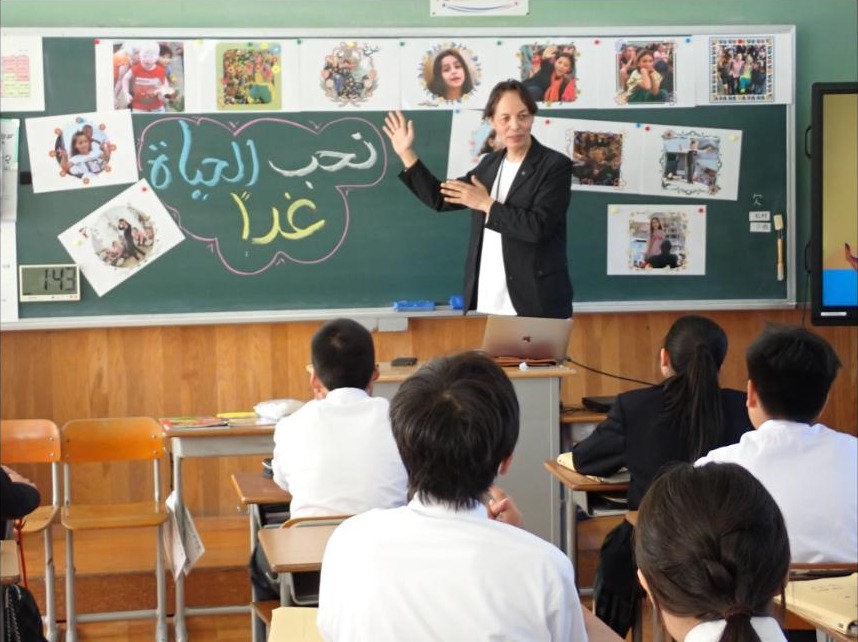
- Design & Execution: An exploratory learning session conducted at Yasaka Junior High School under the Kyotango City Board of Education. Students engaged with the humanitarian documentary “We Love Life Tomorrow,” produced by the Masharawi Fund for Films and Children of Gaza (founded by Palestinian director Rashid Masharawi), which portrays the daily life of children in the Gaza Strip amid structural destruction and displacement.
- Facilitated Dialogue: Rather than presenting the cinematic piece as political rhetoric, it served as a collaborative platform for humanitarian inquiry:
– How are a child’s psychological journey and academic continuity disrupted when their home and school are demolished?
– How do we recognize universal human needs and universal rights to education, dignity, and security across geographical boundaries?
– How can we look past detached media coverage to honor human resilience? - Educational Outcome: Cultivating immunity against the emotional numbness brought on by mindless digital consumption, while awakening cross-cultural solidarity that honors child rights, educational equity, and protection from harm (Howard et al., 2021).
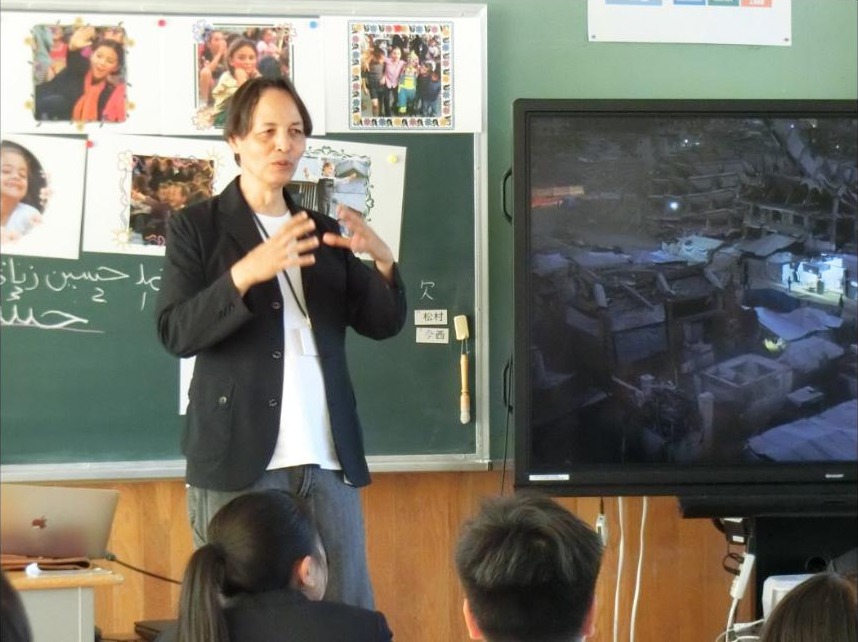
Section VI: Pedagogical Foundations: The (A.S.H.A.P 6Es FIP) Architecture
These experiential interventions draw upon the holistic framework formulated by Dr. Hussein Zanaty (Zanaty, 2023), uniting an ethical paradigm with a technical pathway anchored in Experimental Design Thinking Learning:
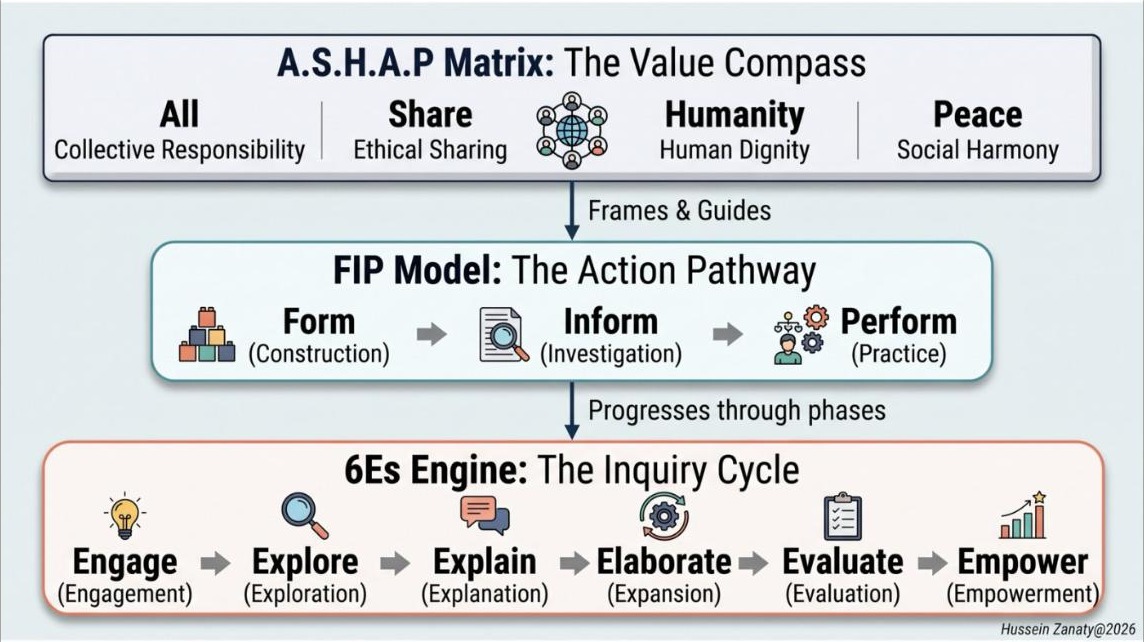
1. The A.S.H.A.P (All Share Humanity And Peace) Ethical Matrix
- All (Collective Responsibility & Inclusivity): Cyberspace is an interconnected ecosystem; the fallout of deceptive content threatens the integrity of the collective community. Verification is therefore a shared civic duty incumbent on all users (UNESCO, 2021; Zanaty, 2023).
- Share (Mindful Ethical Sharing): Transforming the act of sharing or retweeting into an ethical choice. This requires refraining from redistributing unverified materials, severing the viral transmission loops that fuel disinformation campaigns (Ireton & Posetti, 2018).
- Humanity (Upholding Human Dignity): Prioritizing human dignity and compassion above viral metrics, sensationalism, and the pursuit of digital traffic (views), while mindfully mitigating the harms of cyberbullying and defamation (Howard et al., 2021).
- Peace (Building and Sustaining Peace): Establishing civic stability and global peace as the ultimate aim of communication, while actively confronting deceptive narratives engineered to incite discord or unravel social fabrics.
2. The FIP (Form, Inform, Perform) Technical Pathway
- Form (Construction & Foundations): Structuring a constructive, inquisitive mindset; deconstructing the mechanics of manipulated content and sensational psychological hooks, while establishing collaborative inquiry circles (Zanaty, 2023).
- Inform (Investigative Verification): Deploying Open-Source Intelligence (OSINT) tools, reverse-image queries, metadata extractions (EXIF data), and cross-checking claims against authentic source repositories (Ireton & Posetti, 2018).
- Perform (Active Field Execution): Translating verification findings into civic action; reporting verified falsehoods to platform moderators, publishing clarifying counter-narratives, and designing awareness initiatives across school channels (European Commission, 2026).
3. The ASHAP 6Es Engine and Digital Literacy Applications
| Inquiry Phase (6Es) | Alignment with FIP | Convergence with A.S.H.A.P | Applied Intervention in Countering Disinformation |
|---|---|---|---|
| Engage | Form (Cultivating awareness) | Humanity (Sensing risks to dignity) | Sparking curiosity with a viral, controversial case study to analyze its initial emotional resonance (Zanaty, 2023). |
| Explore | Form (Decoding structure) | All (Commitment to collective protection) | Deconstructing the asset in teams: isolating visual discrepancies and tracking outbound links (OECD, 2021). |
| Explain | Inform (Gathering evidence) | Peace (Objective, non-reactive analysis) | Formulating hypotheses on motives behind the manipulation and utilizing reverse-search tools (Ireton & Posetti, 2018). |
| Elaborate | Inform / Perform | Share (Exercising disciplined sharing) | Situating findings within broader legal and developmental contexts, compiling an objective verification report (United Nations, 2015). |
| Evaluate | Perform (Impact assessment) | Peace & Humanity (Equitable appraisal) | Auditing findings for objectivity, evaluating evidence integrity, and eliminating internal cognitive biases (European Commission, 2026). |
| Empower | Perform (Societal action) | All Share (Safeguarding society with truth) | Empowering learners to publish corrective findings, dispel false claims, and educate peers and families (Hill, 2022; Zanaty, 2023). |
Section VII: Strategic Convergence with the Sustainable Development Goals (SDGs)
The A.S.H.A.P architecture links with the United Nations 2030 Agenda for Sustainable Development (United Nations, 2015):
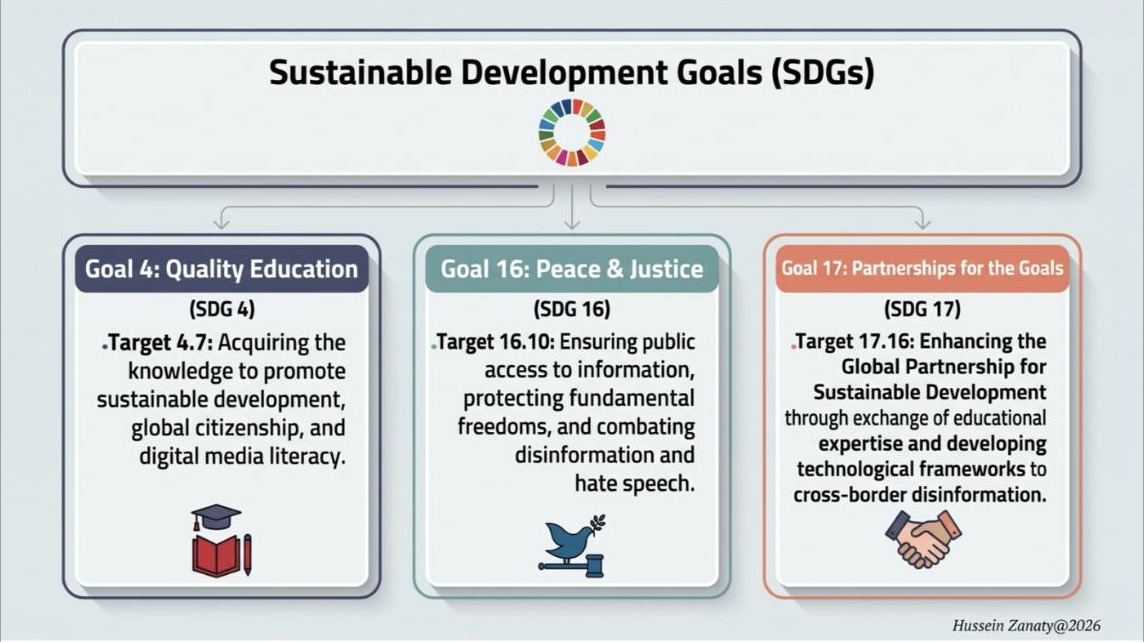
- Goal 4: Quality Education (SDG 4 – Target 4.7): Cultivating critical literacy proficiencies in digital spheres, positioning Media and Information Literacy (MIL) as a prerequisite for global citizenship and lifelong learning (UNESCO, 2021; United Nations, 2015).
- Goal 16: Peace, Justice, and Strong Institutions (SDG 16 – Target 16.10): Defending public access to verified information, defusing polarizing rhetoric, and combating disinformation as a prerequisite for societal peace (United Nations, 2015).
- Goal 17: Partnerships for the Goals (SDG 17): Mobilizing cross-border educational networks to exchange pedagogical models between Japanese classrooms and global partner institutions (United Nations, 2015; Zanaty, 2023).
Section VIII: Policy Directives and Operational Recommendations
Drawing from empirical field data and policy frameworks established by international organizations (European Commission, 2026; Hill, 2022; UNESCO, 2021), this paper outlines actionable recommendations:
- Embedding Media and Information Literacy (MIL) into Formal Curricula: Integrating digital verification competencies as cross-curricular proficiencies across social studies, languages, and sciences, in alignment with UNESCO directives (UNESCO, 2021), rather than isolating them within computer science courses.
- Adopting Design Thinking and Project-Based Pedagogies: Training instructional leaders to employ the (A.S.H.A.P 6Es FIP) framework, transforming traditional classrooms into active discovery labs (Zanaty, 2023) aligned with European Commission guidance on empowering teachers (European Commission, 2026).
- Establishing Dedicated Media Literacy Corners: Instituting interactive portals across school websites, youth centers, and cultural hubs to spotlight student-driven investigations and deconstruct viral media, advancing meaningful civic participation (Hill, 2022).
- Preserving Healthy Digital-Physical Equilibriums: Leveraging Japanese administrative models codified by MEXT (MEXT, 2020) to balance personal device usage with dedicated spaces for direct social interaction and experiential community engagement.
- Utilizing Documentary Arts to Cultivate Empathy: Integrating independent documentary works into educational programming to examine human rights issues and break through algorithmically reinforced caricatures that warp youth perspectives (Howard et al., 2021).
- Institutionalizing National Verification Infrastructures: Advancing the proposed National Media Literacy and Digital Verification Authority “WAEI”, creating a coordinated governance body that unites academic institutes, tech developers, and civic organizations to advance sustainable development objectives (United Nations, 2015).
Section IX: Conclusion – From Content Consumption to Civic Consciousness
Safeguarding young minds in cyberspace is not an arms race against evolving algorithmic scripts; it is a pedagogical and ethical commitment to cultivating human conscience and rational inquiry (OECD, 2021; UNESCO, 2021). Imposing administrative barriers and deploying automated filtering algorithms will remain incomplete without cultivating an inquisitive mindset, continuous intellectual curiosity, and an ethical compass to guide digital interactions (European Commission, 2026).
Applied field work within Japanese classrooms demonstrates that transitioning learners from passive recipients to mindful investigators through the A.S.H.A.P (All Share Humanity And Peace) ethos and the 6Es FIP cycle re-establishes education as a vehicle for liberating thought from deception. This approach weaves empathy and global citizenship together, paving the way toward a more sustainable, conscious, humane, and peaceful world (Zanaty, 2023).
Dr. Hussein Zanaty
Member of the Academic and Research Board
Institute for Global Security and Defense Affairs (IGSDA)
www.igsda.org
Academic and Institutional References
- European Commission. (2026). Guidelines for teachers and educators on tackling disinformation and promoting digital literacy through education and training. Publications Office of the European Union.
- Hill, J. (2022). Policy responses to false and misleading digital content: A snapshot of children’s media literacy (OECD Education Working Papers No. 275). OECD Publishing. https://doi.org/10.1787/e6423a62-en
- Howard, P. N., Neudert, L.-M., & Prakash, N. (2021). Digital misinformation/disinformation and children (Innocenti Research Report). UNICEF Office of Research – Innocenti.
- Ireton, C., & Posetti, J. (Eds.). (2018). Journalism, “fake news” and disinformation: Handbook for journalism education and training. UNESCO Publishing.
- Ministry of Education, Culture, Sports, Science and Technology – Japan [MEXT]. (2020). Guidelines on the handling and educational utilization of mobile phones and smart devices in elementary and junior high schools (Policy Framework Notice No. 2-57). Tokyo: Government of Japan.
- OECD. (2021). 21st-century readers: Developing literacy skills in a digital world. PISA, OECD Publishing. https://doi.org/10.1787/a83d84cb-en
- UNESCO. (2021). Media and information literate citizens: Think critically, click wisely! (Media & Information Literacy Curriculum for Educators & Learners). UNESCO Publishing.
- United Nations. (2015). Transforming our world: The 2030 Agenda for Sustainable Development (A/RES/70/1). UN General Assembly.
- Zanaty, H. (2023). A.S.H.A.P and 6Es FIP Framework: Holistic and experiential design thinking learning in cross-cultural and STEM education. Educational Innovation Series, Tankyu Arab Japanese Academy & Chukyo University SSI.