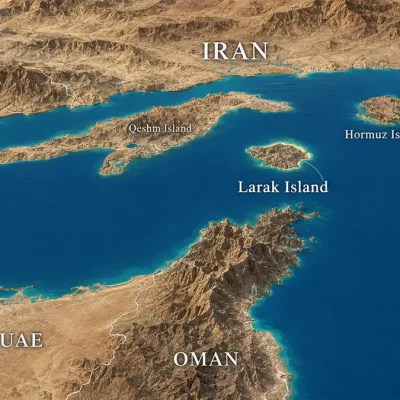


The United States will be hitting Iran (Whose Navy, Air Force, Radar, Anti Aircraft, and all other forms of Defense, together with most of its offensive capability, are GONE!), VERY HARD TONIGHT. At some point in the not too distant future, we will be taking Kharg Island, and other oil infrastructure points, and assume total control of their Oil and Gas Markets, much like we have with Venezuela, which is working out brilliantly for both Venezuela and the United States of America. Thank you for your attention to this matter! President DONALD J. TRUMP
Jun 11, 2026, 10:22 PM
Question: Will Trump actually do it tonight and launch a very hard strike? And will U.S. forces actually take over Kharg Island soon?
Perhaps. In general, many believe it is impossible to be certain that Trump will carry out what he wrote tonight or that he will actually take over Kharg Island. This is because American military history, especially during Trump’s time, is full of instances where public statements have been used more as a tool of psychological and political pressure than as a literal declaration of an operational plan.
However, on the other hand, some believe Trump is annoyed by accusations of making false statements, and the recent significant losses in the US financial markets are deeply troubling to him. Furthermore, Trump senses that Iran is weakening considerably, despite its provocative statements and military responses that are disproportionate to its capabilities, and its insistence on applying a tit-for-tat approach with its adversaries. Iran has reduced the amount of funds it is demanding be released from $25 billion to $12 billion, and even to $6 billion. Is it the weaker party that concedes, or perhaps the stronger one? Or is that how Trump perceives Iran?
Trump promised to strike Iran as punishment for the downing of an American Apache helicopter under unclear circumstances, and he did. He promised a second strike, and he did. Now, expressing his frustration with Iran’s stalling tactics, he is promising a third strike, and it seems he will carry it out. In fact, it appears that all three strikes were pre-planned to exploit the effects of the nearly two-month-long naval blockade.
The seizure of Khorramshahr Island remains the step he might reconsider if Iran submits to his demands.
The question remains: Why does Trump announce details of future military targets on social media?
And to whom is he addressing his message?
Furthermore, what is the likelihood of its execution, given Iran’s desire to continue the war or its desire to avoid it?
Trump is waging psychological warfare and employing political coercion, raising the cost of refusal for the opposing side before any actual decision is made.
He is also creating expectations by presenting Iran with two options: either back down or bear the responsibility for escalation, based on the premise that he is capable and will carry out his threat.
Trump is attempting to manage American public opinion by projecting resolve and strength to voters, markets, and allies. He is also creating calculated ambiguity, as he is known to do, sometimes considering the announcement itself as part of the military operation, rather than a mere political statement.
I believe Trump is directing his message first to the Iranian leadership to convince them that the cost of continuing the conflict is higher than the cost of concessions. He is also addressing the American public to demonstrate that he is fulfilling his promises. He is reassuring allies and oil partners that Washington still holds the initiative. Finally, he is targeting global markets to influence investor expectations and energy prices.
Therefore, the likelihood of moderate or heavy military strikes is relatively high if Washington believes Iran is stalling or continuing to escalate.
As for the takeover of Kharg Island, the probability remains relatively lower, as it would shift the conflict from punitive strikes to the occupation or direct control of strategically and economically important territory—a much larger political, military, and legal decision.
Here, if Iran demonstrates a willingness to compromise or make tangible concessions, the likelihood of major steps like seizing Kharg Island decreases. If it insists on a military response or raises the stakes, the probability of continued US strikes increases, potentially leading to the use of ground forces to seize the islands. The more concessions Iran makes, the less need the US has for a major escalation. The passage of time and the impact of the US naval blockade remain an advantage for the United States.
Dr. Sayed Ghoneim